I know that it’s good to have alternatives to government-created currencies. The dollar’s value is only backed by politicians’ promises. I sure won’t trust those.


Intellectual freedom cannot exist without political freedom; political freedom cannot exist without economic freedom; a free mind and a free market are corollaries. – AYN RAND
I know that it’s good to have alternatives to government-created currencies. The dollar’s value is only backed by politicians’ promises. I sure won’t trust those.

Your building your own deck would be worthwhile only if your cost of doing so is less than the cost of having someone else, such as Jones, build it for you.

To consume, men must first produce.

The Great Depression was not one, but four consecutive depressions that Professor Hans Sennholz has labeled as four “phases”: the business cycle; the disintegration of the world economy; the New Deal; and the Wagner Act.

By removing the market’s solution to collapsing banks, this unraveling forced electorate-sensitive governments to take up the residual risk and backstop the financial system that Scottish banks themselves so effectively regulated in the past.

The Fed has been successful in fooling the markets regarding the temporary nature of zero-percent interest rates, the efficacy of QE, and its ability to normalize rates and shrink its balance sheet.
Say’s Law of Markets already included the answers to the questions against free markets with which the Keynesians attempted to challenge the efficacy of capitalism a century later.

A “hostile” corporate raider can only buy shares that others voluntarily sell.

The coherent and correct case for free trade is, again, a case for unilateral free trade, one that applies to each country individually (with exceptions for isolated circumstances such as national defense).

Business, the activity of producing and trading goods and services, demands a great deal of moral virtue, and businesspeople are not lowly materialists but moral creators.
Steven Kates refutes Keynes’s caricature of the classical economists. Ultimately it is always goods that are traded for goods. Say’s Law, properly understood, explains both what causes unemployment and how to solve it..

Inflation—the government’s expansion of the money supply—creates the appearance of business prosperity along with the fact of general impoverishment, which results in blaming poverty on business and profits.
Ronald Reagan once remarked that the nine most terrifying words in the English language are: "I'm from the government and I'm here to help." Similarly, the financial economist Campbell Harvey recently wrote that the four most dangerous words, feared by central bankers...

Amongst Thomas Piketty, Elizabeth Warren, Bernie Sanders, Jerry Yang, and Jeremy Corbyn a wealth tax is all the rage as a means to rectify “wealth inequality”. But what does it really do?

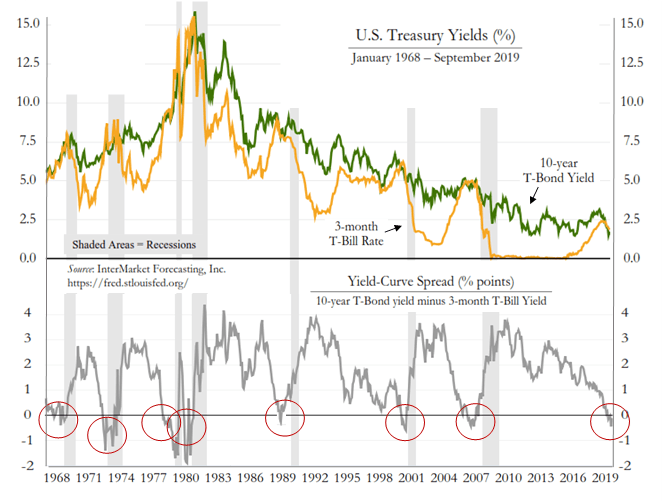
Economists, investors, and policy makers would do well to take seriously the predictive power of the yield curve, to study and comprehend not only its empirical but also its causal features.
The confused objections to share buybacks illustrate the failure to look past the immediate effect and to understand what financial markets do.

We increasingly live in a new “dark age” of economic ignorance, and even stupidity. Few things exemplify this trend as much as the call for price controls over the interactions of multitudes of people in the marketplace of supply and demand. There are few government...

Allowing prices to rise to heights that accurately reveal the intense desperation of the situation is the surest means of encouraging additional supplies of vital goods to be rushed ASAP to the area.
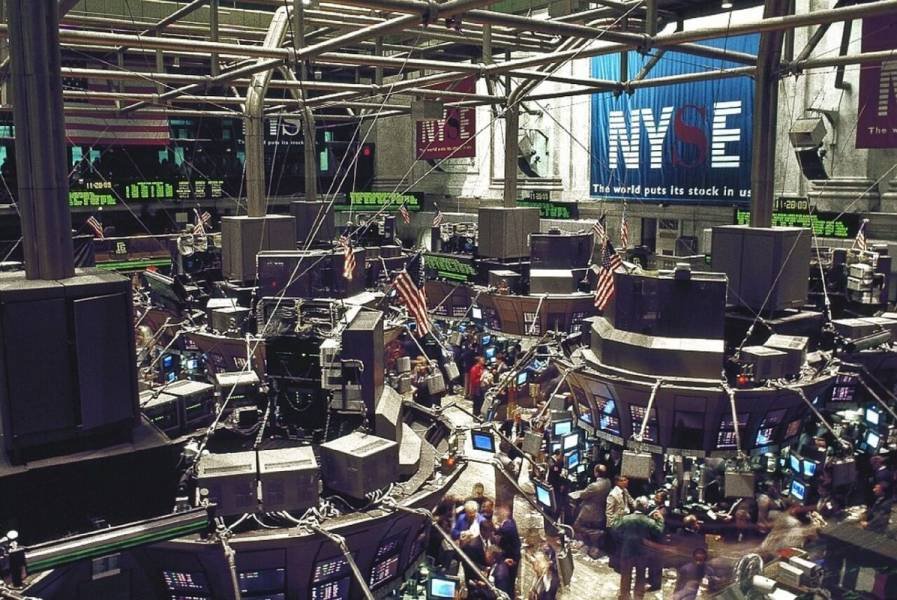
So many CEOs know so little about economics that they don’t know that in a free market producing for the profit of their stockholders in and of itself implies producing for the benefit of everyone.

Bernie wants us to fear billionaires. Actually, the billionaires work for us — for the great mass of average people. They want to acquire money from us. Unlike the government, they cannot simply come and seize our money.

“We’ve decided to offer a competing platform where no voices will be unfairly targeted.”

Rothbard does not refute White’s thesis that Scottish banking was less regulated and hence more stable and well-functioning than England’s banking system in the same 145-year period.

Any official effort to link the dollar to gold today would be just another act of monetary central planning.

American Factory is at its core a damning snapshot of American labor entitlement.

My radio colleague Dennis Prager heads a nonprofit, tax-exempt charitable organization called Prager University. It shares five-minute educational videos from a conservative perspective. There have been over 2 billion views. No sex. No profanity. No chase scenes. But...

Instead of worrying about Google’s influence, we should oppose a real threat: government’s initiation of force, through measures such as carbon taxes or dictating how Google should operate.
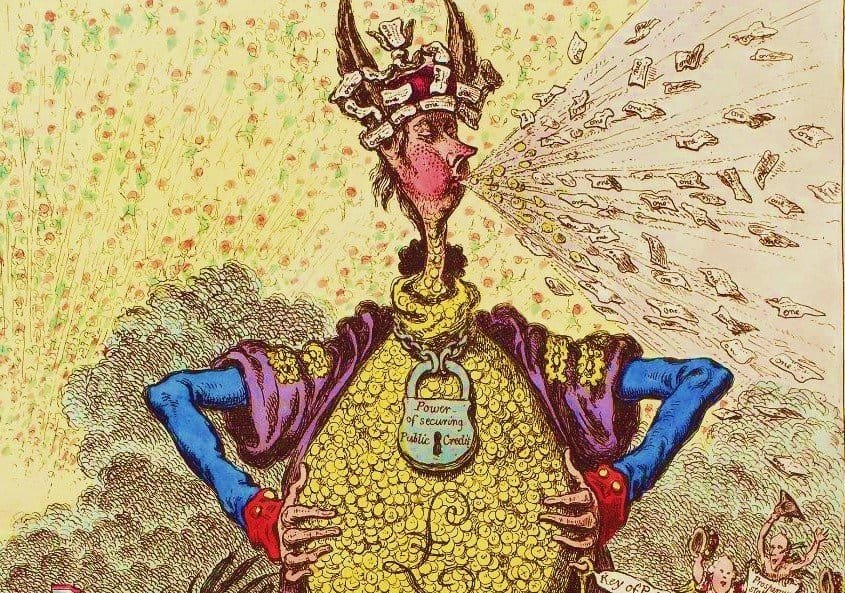
Blame the Bankers, Not Freedom in Banking
That there was widespread support for the Scottish bank suspension did not, however, mean that the suspension left the Scottish public unscathed.
Does the Scottish suspension suggest that fractional reserve banking is, inconsistent with genuine freedom in banking, including the consistent honoring of bank customers’ property rights?

First, the good news: the U.S. and world economies have not imploded, so far, as fallout from the rising trade tensions between the Trump administration and Xi Jinping’s government in China. Now, the bad news: there is no certainty that this will not play itself out...

If you are a student of business, in any stage of your career, I encourage you learn about rational egoism—if success in business is your goal.

Pursuing self-interest in business is not exploitative, because it can only be based on voluntary trade.