Ludwig Von Mises is important because his teachings are necessary to the preservation of capitalism and thus of civilization.


[E]conomic power is exercised by means of a positive, by offering men a reward, an incentive, a payment, a value; political power is exercised by means of a negative, by the threat of punishment, injury, imprisonment, destruction. The businessman’s tool is values; the bureaucrat’s tool is fear. – AYN RAND
Ludwig Von Mises is important because his teachings are necessary to the preservation of capitalism and thus of civilization.
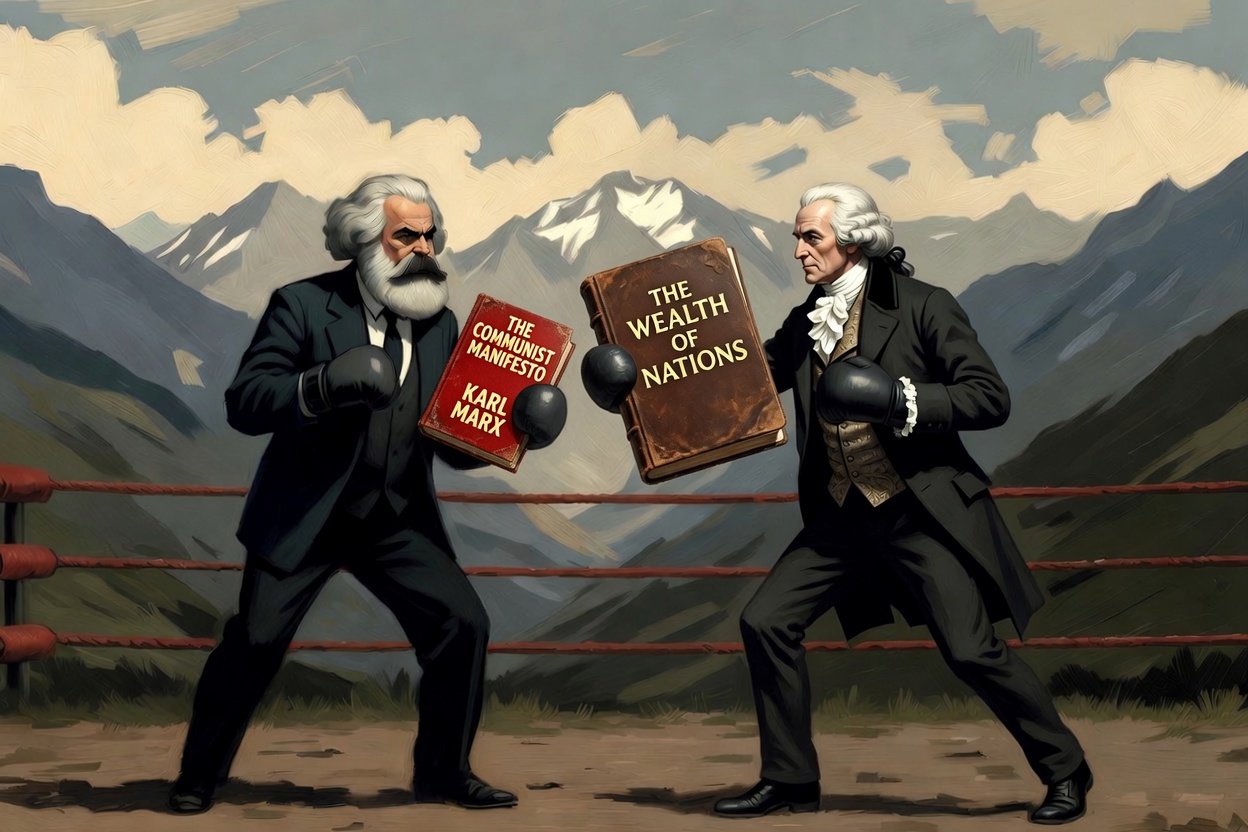
The fundamental place to challenge the exploitation theory is not over the labor theory of value or the iron law of wages, but here, over its conceptual framework—over the doctrines of the primacy of wages and the deduction of profits from wages.
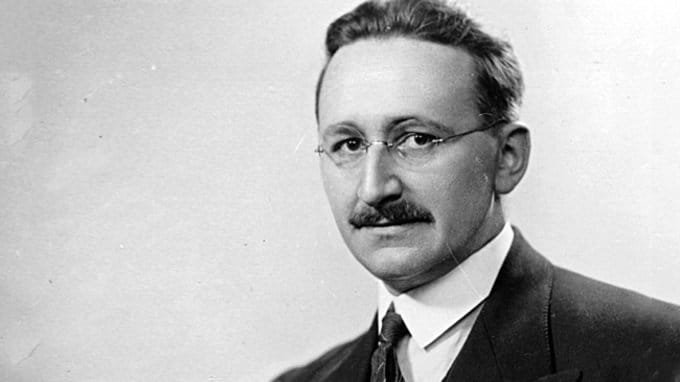
Localized knowledge of time and space is knowledge that a person learns and knows about only in the everyday circumstances of the corners of society in which he lives and works.

In Aristotle, we find a more subtle and sophisticated understanding of some economic themes than in Plato. While Aristotle’s answers were incomplete and often misdirected, as well as incorrect, he at least was among the first to ask the types of questions that centuries later became part of the heart of economic analysis and understanding.
All the rest of Austrian economics follows from these basic insights.

what a good has cost to produce cannot directly determine its value, What it will cost to produce determines how much of it will continue to be made
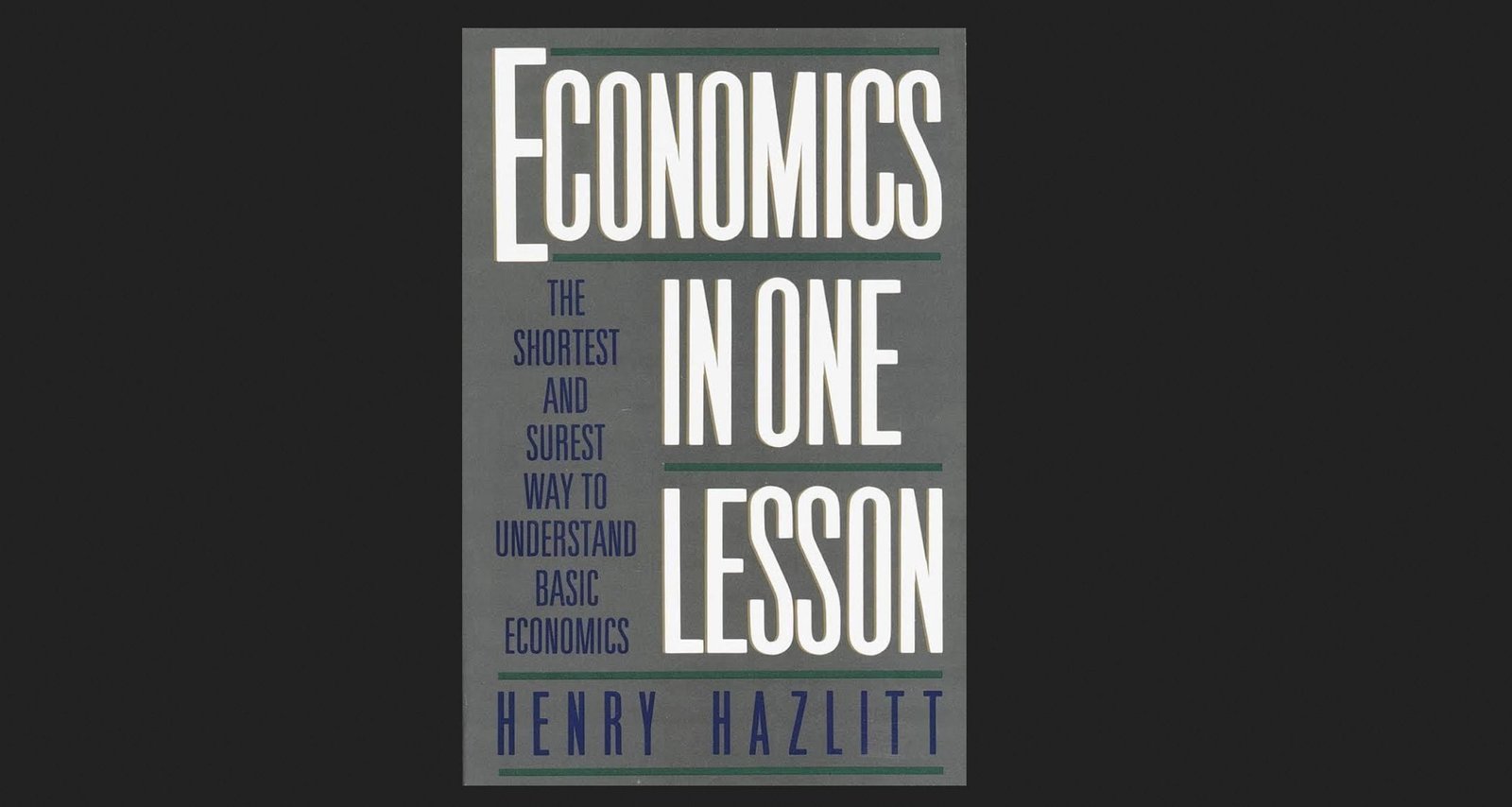
There is no subject that more urgently needs to be understood in the world today than economics. Our well-being, indeed, our very lives, depend on the production of wealth.

The Industrial Revolution has allowed mankind to improve his environment.

Protectionism can’t enrich the country as a whole, only boost certain individuals and industries while impoverishing the rest.

Labor is not, in itself, a source of value. Labor is expended in the pursuit of value, and the market process’s competing bids and offers convert people’s individual assessments into intelligible data called prices.

A shortening of the hours of work is a highly desirable goal. But it cannot be achieved along with growing prosperity except in a free market.
A shortening of the hours of work is a highly desirable goal. But it cannot be achieved along with growing prosperity except in a free market.

Government spending doesn’t really create jobs, but instead moves them from where people themselves would have chosen to where the government dictates by way of its tax, spending, and regulatory policies.

Anyone who has ever taken a competently taught economic principles course should understand why people tend to underestimate market forces for airline fuel, irrigation water, and so many other areas.

The idea that hundreds of thousands of businesses have colluded to raise prices to boost their profit margins and in so doing, engineered the inflation that continues to afflict Americans — is easily disproven.
Fifty years ago, on October 10, 1973, one of the leading members of the Austrian School of Economics, Ludwig von Mises (1881–1973), passed away at the age of 92.
Herny Hazlitt was a popularizer of sound economic thinking, a critic of John Maynard Keynes, and a contributor to ethical moral philosophy. Not bad for a poor fatherless boy and college dropout.

Economics proves the existence of a harmony of the rational self-interests of all participants in the economic system—a harmony which permeates the institutions of private ownership of the means of production, economic inequality, and economic competition.

Capitalism is denounced as “an anarchy of production,” a chaos ruled by “exploiters,” “robber barons,” and “profiteers,” who “coldly,” “calculatingly,” “heartlessly,” and “greedily” consume the efforts and destroy the lives of the broad masses of average, innocent people.
The problem economically with socialism is not calculation of given data, but the generation of the data that would be required, but does not yet exist.

Far from ordinary Americans being crushed in the last few decades by globalization and the entrepreneurial dynamism ordinary Americans’ economic opportunities have expanded and their standard of living has skyrocketed.

National conservatives believe that the allocation of resources brought about by the free market is in fact a less-efficient allocation — one that is worse for the country — than is the allocation that would be brought about by their industrial policy.
Supply-siders insisted that while there may be policy effects on the demand side, one cannot ignore the consequences of the changes such policies make to the incentives of suppliers and entrepreneurs.

In a free market, the prices of products tend to be governed by their costs of production.

In a free market, within the limit of his abilities, each person chooses that job which he believes offers him the best combination of money and nonmonetary considerations. In so doing, he simultaneously acts for his own maximum well-being and for that of the consumers who buy the ultimate products his labor helps to produce.
The prerequisite for more economic equality in the world is industrialization. And this is possible only through increased capital investment, increased capital accumulation. You may be astonished that I have not mentioned a measure which is considered a prime method...
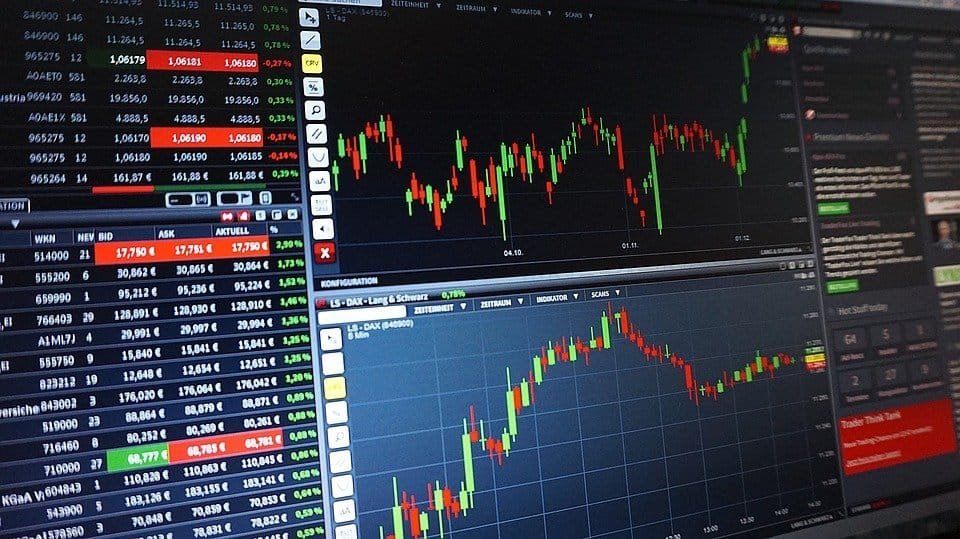
Speculative activity, of course, is not limited to anticipating just future scarcities. Rather, it seeks in general to balance consumption and production over time by accumulating stocks of commodities and regulating their rate of consumption.

What is lacking in order to make the developing countries as prosperous as the United States is only one thing: capital-and, of course, the freedom to employ it under the discipline of the market and not the discipline of the government.
Foreign investment is made in the expectation that it will not be expropriated. Nobody would invest anything if he knew in advance that somebody would expropriate his investments. At the time when these foreign investments were made in the nineteenth century, and at...

In a free market, there is a tendency toward the establishment of a uniform price for the same good throughout the world.

Socialism as a means for improving the condition of man is impossible.

Without capital investment, it would have been necessary for nations less developed than Great Britain to start with the methods and technology the British had started with at the beginning of the 18th century, and slowly try to imitate what the British had done.