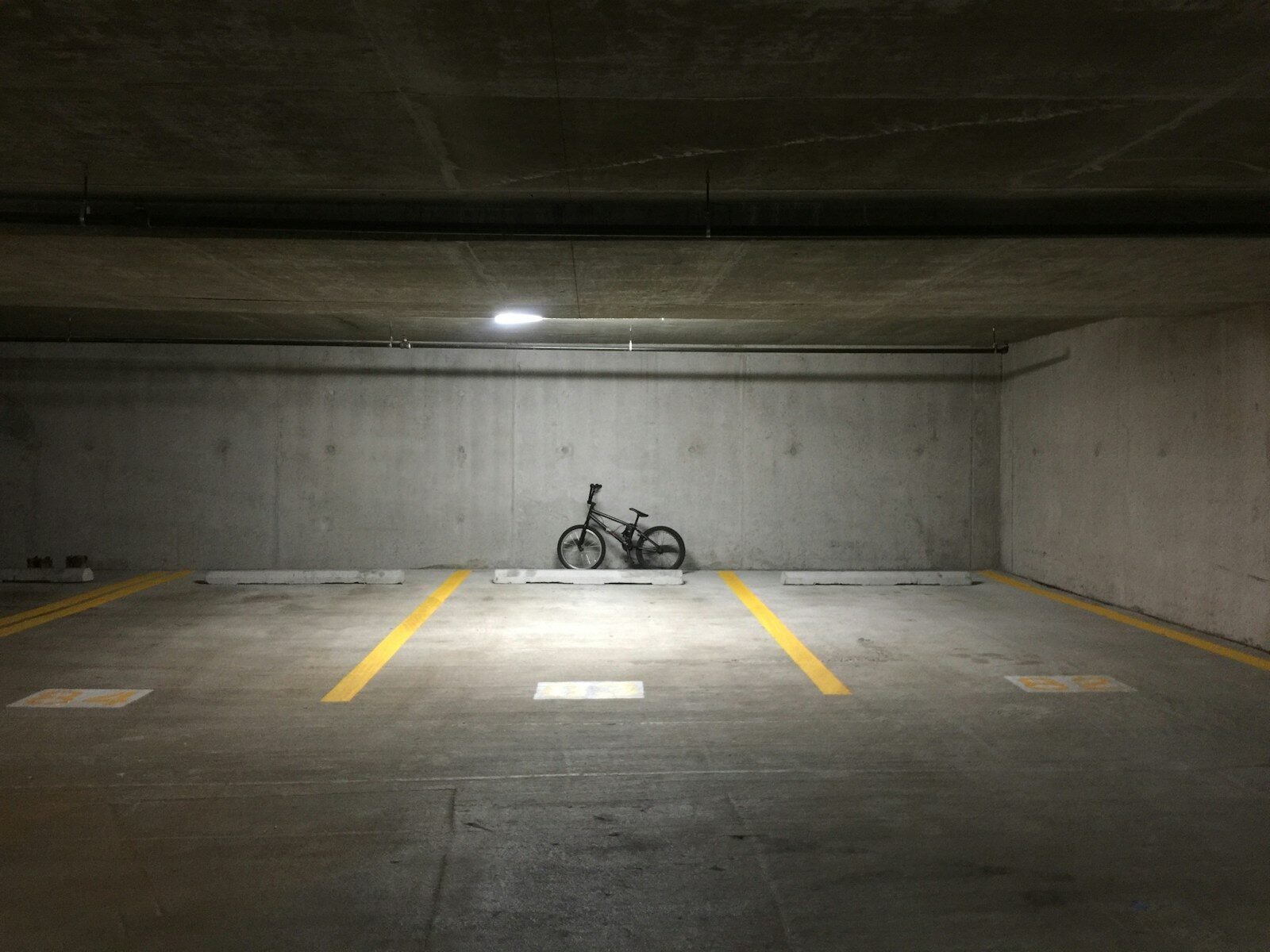
“They paved paradise and put up a parking lot.”
Joni Mitchell’s song “Big Yellow Taxi” invites us to imagine a greedy private developer behind the bulldozers, destroying something people love in order to make money from a patch of asphalt. But in the Seward Park neighborhood of Manhattan’s Lower East Side, it was the government that did the bulldozing.
Politicians promised better housing. To get there, using the power of eminent domain, they bulldozed apartment buildings and forcibly displaced approximately 1,800 families, many of them Puerto Rican, beginning in 1967. Residents were promised an opportunity to return to new homes. Instead, for nearly half a century, they got enormous parking lots.
Construction on the replacement development, named Essex Crossing, finally began in 2015, nearly half a century later. A child forced out of the neighborhood in 1967 could be approaching retirement age before returning became possible.
For decades, politicians, activists, and competing constituencies fought over the property’s future. Each had demands. Each had veto power to block a proposal. No one had to pay the cost of leaving the land vacant and underused. Instead, the people who lost their homes paid. The buildings’ owners paid (even if they were compensated, the eminent domain takings were not voluntary). And the people who might have lived in the apartments that were no longer there paid.
I live a few blocks away from those lots on the Lower East Side, once the most densely populated area on earth where millions of immigrants passed through on their way to better lives. When I finally saw those lots go away and new buildings rise in a development called Essex Crossing, I was elated. I now enjoy the new movie theater and indoor food market. Hundreds of new tenants (nearly all of whom were not the people who had originally lived there) enjoy their new homes. But, as an economist, I always have to ask: At what cost? In the case of Seward Park/Essex Crossing, the cost was enormous.
Ninety thousand home-years
An apartment provides housing every year it is available. Delay 500 apartments for one year, and you lose 500 home-years. Delay them for thirty years, and you lose 15,000 (30 x 500). Using approximately 1,800 homes and fifty years, Seward Park represents roughly 90,000 home-years forgone, compared with keeping that housing available, or rapidly building new housing.
A home built fifty years late cannot supply the fifty years of shelter that were lost. Nor can it restore the businesses, friendships, and neighborhood relationships disrupted by the original clearance. And the loss extends beyond the people bulldozed out of their homes. Removing housing from a city where people desperately want to live only worsens New York City’s housing scarcity, making owning or renting even more expensive in what is already the most expensive housing market in the U.S.
We generally discuss property development by comparing the new buildings with the vacant land that preceded them. At Seward Park, that would be a mistake, because it omits the government action that made the land vacant in the first place. The proper comparison includes the neighborhood that was destroyed, and fifty years of possibilities foreclosed.
Three ways to immobilize property
Seward Park illustrates a broader problem. Government causes property to be underutilized in three ways:
One: It destroys existing uses before securing their replacements.
Two: It holds property idle, without putting it to productive use.
Three: It prevents private owners from changing how their property is used.
The methods differ. The underlying problem is the same: political control results in less desirable, inferior uses of property.
Destroy first, decide later… much later
Seward Park was not the only place where the government forcefully cleared land for a future that failed to arrive. In Boston’s Roxbury neighborhood, land was cleared using eminent domain in the 1960s for a proposed highway extension. But the highway was never built. Instead, just like New York’s Seward Park redevelopment, it took half a century of political squabbling before “Parcel 9” became the site of the Melnea residential development and hotel in 2019. By then, the government’s original highway plan had vanished in political hot air, and so did 50 years of productive use of the land, which sat empty.
A politically notorious example occurred in New London, Connecticut, where the city used eminent domain to seize private property from its owners to hand it over to other private parties for redevelopment. Susette Kelo and other homeowners challenged the home seizures in a case that went all the way to the U.S. Supreme Court. Unfortunately, the court narrowly sided with the town against the homeowners in a hotly contested decision in 2005, Kelo v. City of New London.
Justice Sandra Day O’Connor wrote the scathing dissent. Warning that the ruling harmed property owners while favoring corporations and developers with political influence, she said:
“The specter of condemnation hangs over all property. Nothing is to prevent the State from replacing any Motel 6 with a Ritz-Carlton, any home with a shopping center, or any farm with a factory.”
Using eminent domain, the government now had “license to transfer property from those with fewer resources to those with more.”
In contrast to a government seizing property with eminent domain, a private developer buying property must persuade the owner to sell. Economically, that makes all the difference in the efficient utilization of the property.
Caption: Little Pink House (New London, CT) and owner, Susette Kelo, before the house’s demolition. Credit: Goldwater Institute
After all that, sadly, the Kelo property remained vacant for almost twenty years; in 2023, the city was still arranging the sale of some of the remaining development parcels for another attempt at development. Some small-scale development has finally taken place, including a recreation center dedicated in 2025. That does not refund the years Susette Kelo lost, nor does it give her back her beloved pink house. An excellent movie made in 2017, Little Pink House, dramatizes her ultimately unsuccessful battle to keep it.
Eminent domain gives the government the power to seize property, but it does not magically bestow on the government officials superior knowledge of what is the best economic use to replace it. On the other hand, a private developer has powerful incentives – the incentive of profit and loss – to discover the best uses for the property.
By “best” we mean the uses that new residents value the most, indicated by their willingness to pay. In contrast to the government, a private developer must persuade owners to sell; he cannot force them to sell. This imposes a discipline: the developer must account for the value owners place on what already exists. But the government, using legal devices such as eminent domain, can forcefully override that judgment, clear the land, and leave all of us to suffer while political officials squabble.
When government owns the land, the future languishes
The government does not have to demolish a neighborhood to waste valuable property. Sometimes it merely has to own and control it. Consider Hellinikon, a former airport in Athens, Greece, and adjoining waterfront. The redevelopment site encompasses an enormous area of some of Athens’ most valuable land: approximately 1,532 acres and 3.5 kilometers of coastline on the Athenian Riviera.
The airport closed in 2001, but the government did not choose a developer until 2014. And the transfer of title to the developer, which would permit redevelopment to proceed, did not close until June 2021—twenty years after the airport had closed.
During that long interim, the site did get some use; some parts housed temporary facilities for the 2004 Olympics. But the broader redevelopment remained stalled. Reuters described years of bureaucracy, political resistance, and local opposition; Greece’s recession compounded the difficulties. But, unlike for a private developer who must carry the cost of idle land in financing costs and lost profits, there was little or no cost to the politicians for delay. Even though it was prime waterfront property, it languished for years waiting for political permission before it could be developed.
Back in New York, the problem extends far beyond Seward Park. A 2016 comptroller audit identified 1,131 city-owned vacant lots (most of which the city acquired due to non-payment of property taxes). 231 of the lots had been held vacant by the city for forty to fifty years. Another 513 had been held vacant for thirty to thirty-nine years. In total, three-quarters of the lots had been held vacant for at least thirty years. This represents hundreds of thousands of lost home-years where New York City residents could have been living in homes.
A simple solution would be for the city to auction off its property inventory. Put this property back into the hands of private developers who will have the financial incentive to quickly build homes and other productive uses. Instead, a city government that regularly deplores the shortage of affordable housing sits on vacant land for decades, just like it did with Seward Park. The city is a destructive landowner.
Nominally private, but the government calls all the shots
Unfortunately, the government does not even need to own property to control it. Through numerous restrictions, it can leave an owner stuck with the deed, the taxes, the maintenance bills, and the financial risk, while reserving to itself the authority to decide what the owner may do. Zoning, landmarking, discretionary reviews, and years-long approval processes all provide opportunities to stop a property from being adapted to a more valuable use.
In California, a review of San Francisco’s housing permit process, using 2022 data, showed that obtaining approval for a new housing project took an average of 523 days. Then getting the actual building permit took an additional 605 days. The report identified discretionary (arbitrary) decision-making and local political opposition among the barriers. These delays further destroy many home-years of housing.
The developer can have buyers willing to pay, banks and investors willing to finance, and contractors willing to build. But that is not enough. Sundry people and groups with no ownership stake in the property – no “skin in the game” – possess the power to interminably delay or prevent the new homes from being built.
Consider historical preservation. Someone who values an old building is, of course, free to buy it, maintain it, or raise money from others who share that preference. Doing so requires confronting the full cost of preservation, including the lost alternative uses for that property. But securing a government restriction is a different proposition. It allows preservation advocates to indulge their aesthetic preferences while imposing the costs entirely on others: the owner and the people who won’t benefit from alternative uses of the site.
It is easier to demand historical preservation when someone else must pay for it, just like it is easier to oppose housing for others when one is already entrenched in one’s own home. The well-fed Empress Marie Antoinette famously and callously said to Paris’s starving peasants on the eve of the French Revolution: “Let them eat cake.” A “NIMBY” – which stands for Not in My Back Yard – is someone who already has a home, but uses government power, such as zoning and historical preservation laws, to prevent the construction of new homes for neighbors they don’t want.
True private ownership, free of government restrictions, is the answer
The root cause connecting these forms of underutilization is government control. Private ownership brings decisions and consequences together. Political control pulls them apart.
An owner who leaves property underused sacrifices the income or sale proceeds available from a better use. He bears that cost, which prompts him to try to avoid it by finding the most valuable economic uses for that property. That cost exists even if the property has no mortgage because the owner’s wealth is at stake.
And if an owner cannot make a project work, he can sell to others who will. Moreover, investors can demand changes and lenders can refuse additional financing for poorly thought-out projects. Ultimately, persistent losses will result in bankruptcy and the property will go to someone who has greater ability to create value. None of this happens when the property is politically controlled, or it happens very slowly and imperfectly.
Of course, private owners do make bad decisions. But they face a reward system of profits and losses that penalizes poor decisions and rewards better ones, which is why they will make far fewer bad decisions and many more good ones.
Political decision-makers face different incentives. Blocking construction may win votes, satisfy an organized constituency, or avoid an unpleasant public meeting. The housing forgone does not appear as a deduction from the official’s salary, which remains the same, regardless.
Instead, the cost is spread among people who effectively have no voice in the decision, including people who now cannot afford to move into that region because home prices and rents have been driven higher. The parking lot remains and the politician’s career prospers.
Private development – with its profit and loss incentives – discovers what property should become. It discovers the economically most valuable uses, based on what people are willing to pay. All of this happens through the collective decisions of everyone. Prospective tenants make offers. Builders submit bids. Investors assess risks. Buyers choose among alternatives. Owners revise their plans. No central authority is needed to determine the correct use of a property in advance. People test their judgments with their own money.
Political control legally empowers people and groups to say no without paying for the consequences. At Seward Park, Roxbury, Athens, and all over the world, they could say no for decades. And they are often considered political heroes for doing so.
As a Lower East Side resident, I am grateful for the new amenities that have finally emerged at Essex Crossing, rather than the sterile, unsightly, and crime-ridden parking lots.
But those lost decades never had to happen. The solution is to end government control over the economic uses of property.