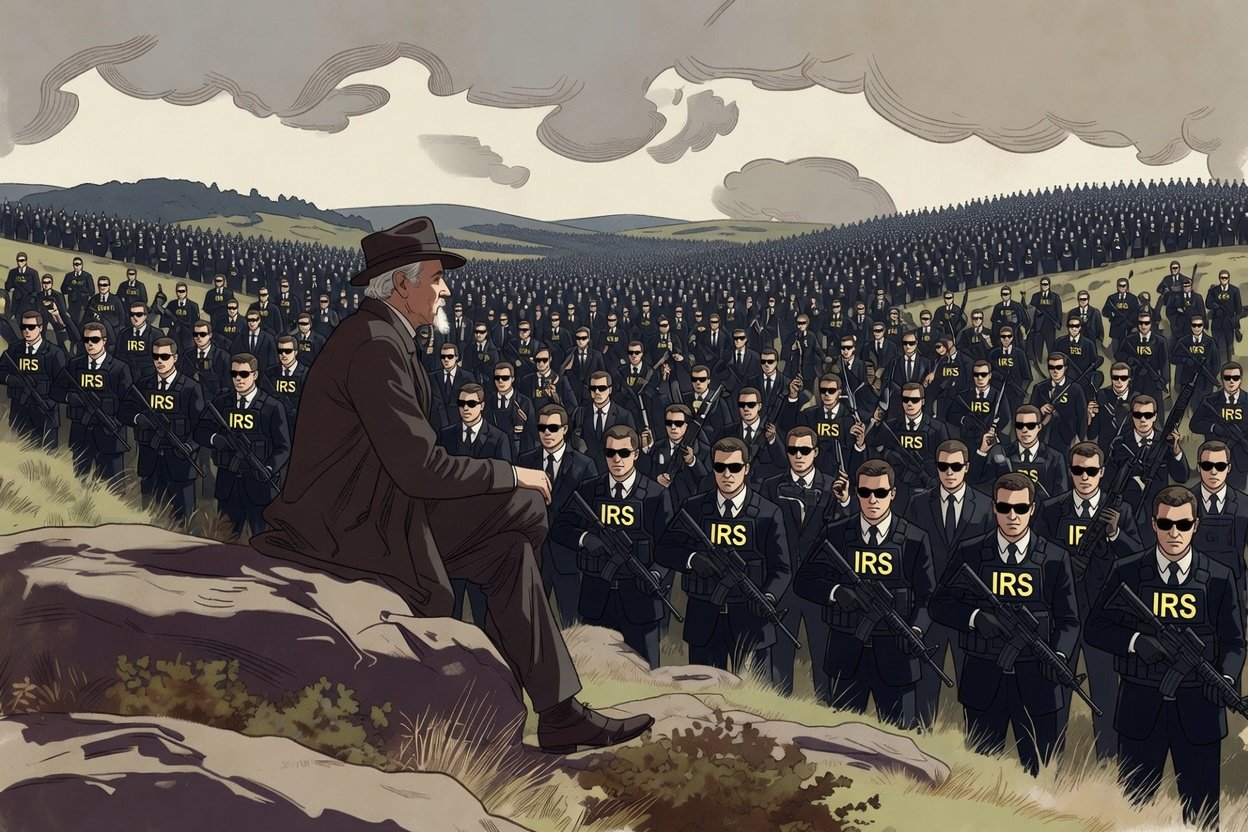
“At a Loss for Words: Conversation in an Age of Rage” (Random House Canada, 2024) caught my eye because I was hoping to gain insight into how to have rational conversations with people who disagree. Instead of such advice, the book’s underlying theme is a defense of wealth re-distribution (for which I use the shorthand ‘the welfare state’). Carol Off, the author and long-time journalist with the Canadian public broadcaster, laments in six dedicated chapters how key words characterizing the welfare state have been hijacked and distorted by the extreme right and now threaten it and liberal democracy in general.
The author’s chosen key words are freedom, truth, democracy, woke, choice, and taxes. The last one Off considers the most important, because taxes make a civilized society – by which she means the welfare state – possible. Her paraphrased quote from the U.S. Supreme Court justice Oliver Wendell Holmes in the early 20th century: “Taxes are the price we pay for civilization,” prompted my post. I wanted to challenge the premise that the tax-funded welfare state is the ideal civilized society. The focus here, therefore, is on the chapter about taxes.
Off sets up her defense of the welfare state with a false alternative: either we have a welfare state or a libertarian anarchy (which she equates with capitalism). She argues that the welfare state is ideal as the only social system that can achieve equality of outcomes for all, with the government collecting taxes from the productive and “redistributing” them to the less productive through various subsidies and programs.
The only alternative to the welfare state funded by taxes, Off suggests is a libertarian anarchy where there is no government and no rule of law, and where everyone must fend for themselves, resorting to vigilante justice for self-defense and to physical coercion to get what one wants. But this alternative between the welfare state and anarchy is false, because the two systems share an essential feature: physical coercion. The welfare state uses coercive taxation to achieve its aims. In anarchy, all forms of physical force and fraud by everyone against all are the rule, which makes it a nightmarish survival-of-the-fittest scenario that we must dismiss as anti-civilization.
But is the tax-funded welfare state an ideal civilized society? I argue ‘no’– because it relies on government coercion and therefore diminishes human welfare.
According to Ayn Rand, a civilized society is one in which physical force is banned from social relationships and can only be used to retaliate against those who initiate it. Why is this principle of non-initiation of physical force so important to human welfare, and what does it imply for organizing society and the role of government?
To maximize welfare, for humans truly to flourish, we must be free: to think and to act accordingly, to acquire knowledge and skills, to create products and services, and to trade with others. Initiating physical force to any degree diminishes freedom and hinders our ability to survive and thrive, to create wealth and sustain prosperity. Taxation in the welfare state is not voluntary. It uses physical force – the government punishes non-compliance by confiscation of property or imprisonment – that restricts individuals’ freedom to create, produce and trade, and reduces prosperity for all.
The alternative social system that bars physical force from social relationships and makes a civilized – truly free –society possible is capitalism (which, despite Off’s beliefs, is not synonymous with anarchy). In capitalism, the government does not create and maintain a welfare state and fund it through taxation. Instead, it has only one but crucial role: protection of individual freedom against physical force. This includes retaliation against initiators of force, through the police, the law courts, and the military.
A capitalist government itself cannot initiate force, including imposing taxes on its citizens. It must fund its operations through voluntary means only (such as lotteries or fees for court protection of contracts). All other services in a civilized society under capitalism, such as education, health care and health insurance, and cultural institutions are privately funded and offered at different price points by private companies in free markets.
A pure capitalist system is obviously not the reality today, but it has been approximated in countries where political and economic freedom are the greatest, such as Ireland, Switzerland and Estonia (and historically, America, based on its founding documents). These countries are characterized by higher economic prosperity, smaller governments (measured by government spending/GDP), lower taxes, a strong rule of law and respect for property rights, and higher life satisfaction than their peer countries in the OECD. They show that it is possible to shrink the welfare state and increase liberty – to move towards a truly civilized society.
Taxes are not the price we pay for civilization. In a civilized society, there would be none. Those doing productive work recognize that government protection of their freedom from coercion is a value that allows them to live in peace and to prosper through voluntary interactions with others – for which they would be willing to pay.
If we want a true civilization, we must advocate for barring physical force from social relationships – for freedom from force.