Richard M Salsman

Dr. Salsman is president of InterMarket Forecasting, Inc., an assistant professor of political economy at Duke University and a senior fellow at the American Institute for Economic Research. Previously he was an economist at Wainwright Economics, Inc. and a banker at the Bank of New York and Citibank. Dr. Salsman has authored three books: Breaking the Banks: Central Banking Problems and Free Banking Solutions (AIER, 1990), Gold and Liberty (AIER, 1995), and The Political Economy of Public Debt: Three Centuries of Theory and Evidence (Edward Elgar Publishing, 2017). In 2021 his fourth book – Where Have all the Capitalist Gone? – will be published by the American Institute for Economic Research. He is also author of a dozen chapters and scores of articles. His work has appeared in the Georgetown Journal of Law and Public Policy, Reason Papers, the Wall Street Journal, the New York Times, Forbes, the Economist, the Financial Post, the Intellectual Activist, and The Objective Standard. Dr. Salsman earned his B.A. in economics from Bowdoin College (1981), his M.A. in economics from New York University (1988), and his Ph.D. in political economy from Duke University (2012). His personal website is richardsalsman.com.

America’s New ‘Red Scare,’ Unlike the Old One, is Fake

America’s New ‘Red Scare,’ Unlike the Old One, is Fake

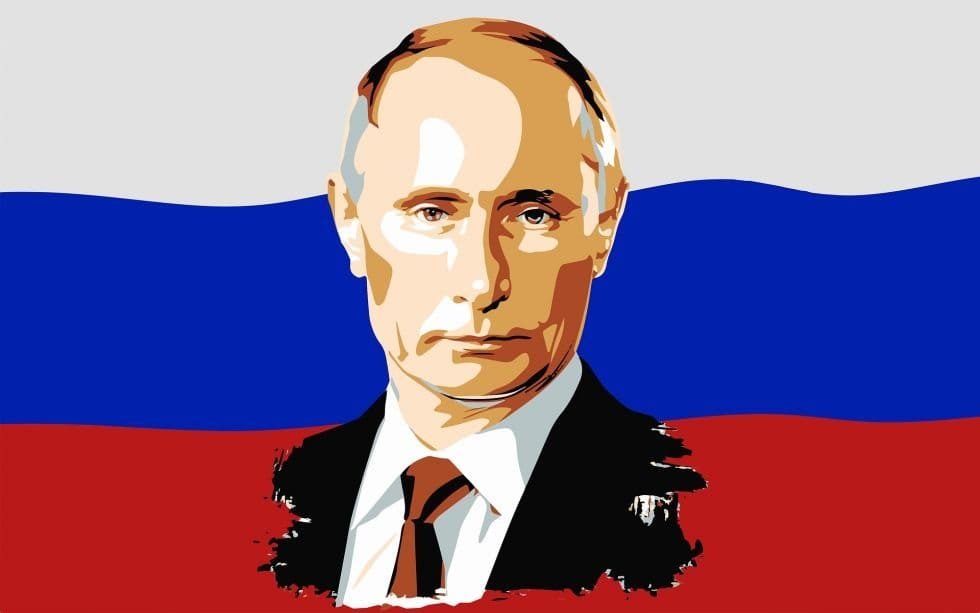
The political left in America is conveniently a half-century late; in the 1950s, 1960s and 1970s the Russian threat was real and the ‘Red Scare’ justified; the latest scare is fake, an excuse by the left to explain its electoral failure

Scott Brown: A Mere Speed Bump on the Conservatives’ Road to Serfdom

Scott Brown: A Mere Speed Bump on the Conservatives’ Road to Serfdom

Most polls in recent years reveal that Americans believe the country is “on the wrong track.” That’s surely true — and both political parties are taking them there. Yet few people know what the right track actually entails. It’s time to pave a new road entirely — not …

Altruism: The Moral Root of the Financial Crisis

Altruism: The Moral Root of the Financial Crisis

The financial crisis is, fundamentally, a moral crisis. To end the crisis, we must acknowledge that government intervention caused it, and we must demand that the government begin removing its coercive hands from the economy. With an eye to the short term, we must deman…

Obama’s Plans Will ‘Work’ — To Breed Servile Dependence

The political left-wing in America and most Democrats are hopeful, even gleeful, that “Obamanomics” might “vanquish” Reaganomics,[1] that tax-hiking, pork-dispensing schemes aimed at boosting consumption and government (a la John Maynard Keynes)[2] will displace...

Another Nail in the Coffin for Property Rights

The U.S. Supreme Court last week ruled that it’s perfectly legitimate for a local government to seize private property, pay a below-market price and hand it over to another private citizen or company that claims it can do more with the property — i.e.,...

Dispelling Some Crude Myths About Oil’s Real Impact

Economists are beginning to panic about the recent run-up in the oil price (+36%, year to-date, to $44.4/barrel) and its likely future impact on stock prices, profits and output in the U.S. But there’s no reason to panic. A fast-rising oil price is no necessary...

Persecution of Microsoft is Immoral

Persecution of Microsoft is Immoral

The government’s persecution of Microsoft continues unabated. The U.S. appeals court is now considering whether the Bush administration and 19 states negotiated an adequate settlement in their antitrust case against Microsoft. It’s time for the American...

Turning Iraq Into Another Iran

Many commentators have remarked recently that the U.S. stock market has not rebounded by as much as they expected, especially given the recent, rapid U.S. military success in Iraq. But these observers fail to recognize that the market is forward-looking — and...

Deflation Myth

U.S. Federal Reserve officials, including Fed chairman Alan Greenspan, and commentators in the financial media have been worrying about deflation (a rise in the purchasing power of a currency) in recent years and months. It’s hard to figure why. Not only is...

U.S. War on Iraq is Morally Legitimate

CAP MAG EXCLUSIVE: As the U.S. military stands poised (finally) to wage war against the Iraqi regime — merely one spoke in the “Axis of Evil” — critics of the Bush Administration and apologists for terror regimes claim that there’s been a...

Markets, the Dollar, and the “War on Terrorism”

Investors should expect continued weakness in the dollar over the coming months and year, by 8-12% against most major currencies. Dollar weakness this year already has exerted a bearish influence on U.S. stocks and will continue to do so with a lag. If, as we expect,...

A Spring-loaded Bull Market

U.S. corporate profits rose 56% in the first half of 2002, yet stock prices have plunged. The problem is not corporate governance, it’s political governance Contrary to popular opinion, most of America’s CEOs are doing a fabulous job. On the heels of a 50%...

The Trend Toward Totalitarian Government

A truly civilized, wealth-respecting world would observe capital flight and brain drains, recoil in horror and stop penalizing success. It would cut tax rates and regulation and cease calling wealth-makers as criminals who deserve a noose — or deportation. But...

The War on Capital — Not Terrorism

The War on Capital — Not Terrorism

Just as they’ve blurred the distinction between legal tax avoidance and illegal tax evasion, OECD officials have tried to blur the distinction between money-laundering and tax havens — even though the latter involves moving illegally-gained money above-ground, from the…

America’s Real Robber Barons: The Congress of the United States

As we write, both Democrats and Republicans are introducing legislation to seek a moratorium on re-incorporations to tax havens — and some of the bills include a retroactive repeal of the right of companies that have already accessed havens. But Congressional...

Tax Competition: Enemy of the Welfare State

Tax Competition: Enemy of the Welfare State

In addition to offering sanctuary to the world’s tax-burdened, tax havens provide an indirect benefit to the tax-payers who remain pinned under welfare state tax burdens: they cause tax rates and tax burdens in those welfare states to be lower than they might be...

The Case in Favor of Tax Havens

Ironically, tax haven nations and territories achieve precisely the goals first set out by the OECD in the early 1960s. Here’s how the OECD described (as it still, hypocritically, describes) its initial goals: To achieve the highest sustainable economic growth...

No spam. Unsubscribe anytime.