When governments find it impossible to continue raising taxes or borrowing funds, they have invariably turned to printing paper money to finance their growing expenditures. The political economy of the French Revolution is a tragic example of this.


When governments find it impossible to continue raising taxes or borrowing funds, they have invariably turned to printing paper money to finance their growing expenditures. The political economy of the French Revolution is a tragic example of this.

The best policy for government to follow is “laisser passer, laisser faire” — let goods pass and leave men alone to their own decisions.

Mercantilism developed in the emerging nation-states under the kings, especially, in France and Spain and in Great Britain, as a set of economic tools to assist in bringing about the centralization of political power and control.

The Catholic Church had a set of fundamental beliefs and principles that set it apart from the Greek and Roman views that had preceded it, and which were to have importance in the future in terms of their economic impact.
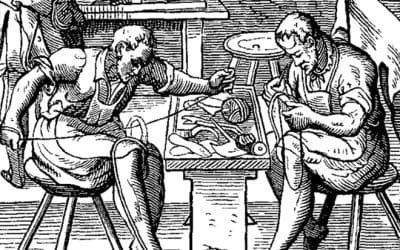
Political, social, and economic life in the Middle Ages revolved around two sets of institutions.
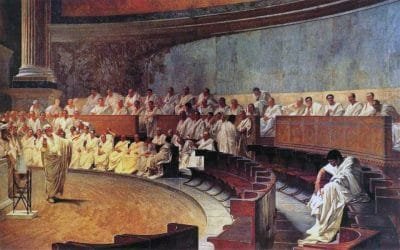
The area in which the Ancient Romans did leave a body of thought, and one that has had lasting influence and significance for future generations, especially in the West up until our own time was in the area of law and contract.

Political-Economic Ideas of The Greeks, Part 3

Political-Economic Ideas of The Greeks, Part 2
Austrian Economics is the most powerful explanation of why governments, no matter how well-intentioned, lack the knowledge, wisdom and ability to direct the lives of multitudes of people better than those people can do for themselves.
Austrian Economics is the most powerful explanation of why governments, no matter how well-intentioned, lack the knowledge, wisdom and ability to direct the lives of multitudes of people better than those people can do for themselves.
Austrian Economics is the most powerful explanation of why governments, no matter how well-intentioned, lack the knowledge, wisdom and ability to direct the lives of multitudes of people better than those people can do for themselves.
Austrian Economics is the most powerful explanation of why governments, no matter how well-intentioned, lack the knowledge, wisdom and ability to direct the lives of multitudes of people better than those people can do for themselves.
Political-Economic Ideas of The Greeks, Part 1

Ludwig von Mises’s majestic magnum opus, Human Action: A Treatise on Economics, was published on September 14, 1949. In the nearly seven decades since its appearance, Human Action has come to be recognized as one of the truly great classics of modern economics.
Austrian Economics is the most powerful explanation of why governments, no matter how well-intentioned, lack the knowledge, wisdom and ability to direct the lives of multitudes of people better than those people can do for themselves if left sufficiently at liberty to do so.

We owe to John Locke and those other thinkers complementary to his political philosophy of man, society and government all the freedom and prosperity that mankind has known and enjoyed over the last 300 years, beginning in Europe and North America and then spreading imperfectly to other parts of the world.
Austrian Economics is the most powerful explanation of why governments, no matter how well-intentioned, lack the knowledge, wisdom and ability to direct the lives of multitudes of people better than those people can do for themselves.
Latest pro-Capitalism goodness sent weekly to your email box.
No spam. Unsubscribe anytime.