The operation of the tendency toward a uniform rate of profit requires that high profits be made by continuously introducing productive innovations in advance of competitors.


The operation of the tendency toward a uniform rate of profit requires that high profits be made by continuously introducing productive innovations in advance of competitors.
How the profit motive acts to make production steadily increase in a free market, and becomes an agent of continuous economic progress.

The real advocates of the consumers—their virtual agents—are businessmen seeking profit, not the leaders of groups trying to restrict the freedom of businessmen to earn profits.
In total opposition to the misguided efforts of the Marxists to contrast production for profit with “production for use,” the fact is that production for profit is production for use.

The idea that there is a third system — between socialism and capitalism, as its supporters say — a system as far away from socialism as it is from capitalism but that retains the advantages and avoids the disadvantages of each — is pure nonsense.
The uniformity-of-profit principle explains how the activities of all the separate business enterprises are harmoniously coordinated so that capital is not invested excessively in the production of some items while leaving the production of other items unprovided for.

The best way to begin to understand the functioning of the price system, and thus the full nature of the dependence of the division of labor on capitalism, is by understanding the following very simple and fundamental principle. Namely, there is a tendency in a free mar…

Analyzing interventionism during the First World War in Germany and England.

Let us consider one example of interventionism, very popular in many countries and tried again and again by many governments, especially in times of inflation. I refer to price control. Governments usually resort to price control when they have inflated the money...

Bitcoin Volatility is a Feature, Not a Bug.

four ways in which the lives of those of us in the modern, capitalist world differ categorically from the lives of almost everyone until just a few centuries ago.

Eighty years ago, in the midst of the Second World War, Austrian-born economist Joseph A. Schumpeter published one of his most famous books, Capitalism, Socialism, and Democracy (1942). A central question that he asked and tried to answer was, “Can Capitalism Survive?…

A famous, very often quoted phrase says: “That government is best, which governs least.” I do not believe this to be a correct description of the functions of a good government. Government ought to do all the things for which it is needed and for which it...

The fact is that economic calculation, and therefore all technological planning, is possible only if there are money prices, not only for consumer goods but also for the factors of production.

Ludwig Von Mises’s devastating critique of why a socialist economic system must always be inferior to capitalism.

We’ve reached the end of the road and found that the people who must ultimately pay for unlimited government are us. And whether through taxes or inflation, pay we will.
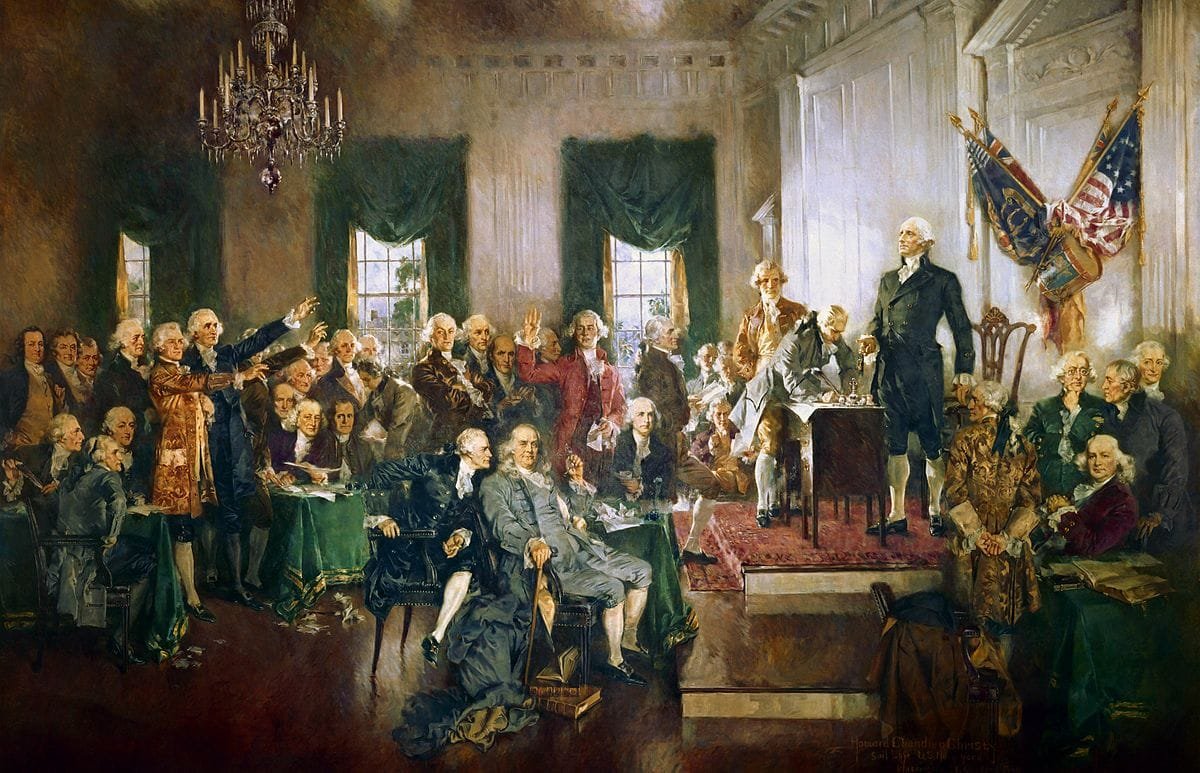
The development of all the institutional features of capitalism is well illustrated by the economic history of the United States.

The socialist system, however, forbids this fundamental freedom to choose one’s own career. Under socialist conditions, there is only one economic authority, and it has the right to determine all matters concerning production. One of the characteristic features of our...

Economic progress is the leading manifestation of yet another major institutional feature of capitalism: the harmony of the rational self-interests of all men, in which the success of each promotes the well-being of all.

In a capitalist society, there is continuous mobility—poor people becoming rich and the descendants of those rich people losing their wealth and becoming poor.

It is no exaggeration to say I have learned more about the science of economics from George Reisman than from all other economists combined.

The idea of government as a paternal authority, as a guardian for everybody, is the idea of those who favor socialism.

The existence of freedom under laissez-faire capitalism requires the existence of government.
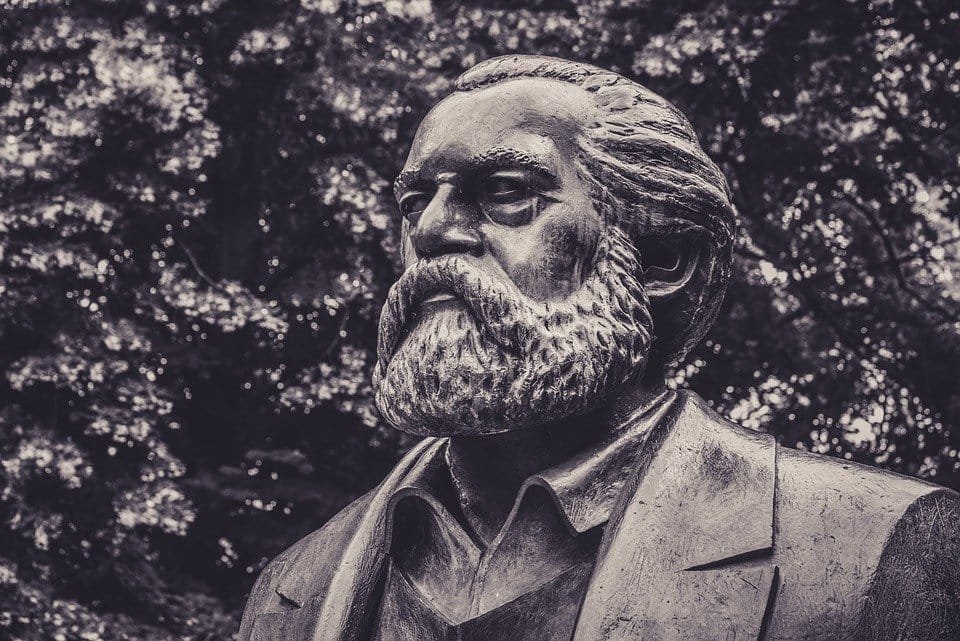
The capitalist system was termed “capitalism” not by a friend of the system, but by an individual who considered it to be the worst of all historical systems, the greatest evil that had ever befallen mankind. That man was Karl Marx.

The greatest era of capitalist development—the last two centuries—has taken place under the ongoing cultural influence of the philosophy of the Enlightenment.
In spite of all its benefits, capitalism has been furiously attacked and criticized. It is necessary that we understand the origin of this antipathy.

Economics belongs alongside mathematics, natural science, history, philosophy, and the humanities as an integral part of a liberal education.
The mere fact that you are living today is proof that capitalism has succeeded, whether or not you consider your own life very valuable.

What makes the science of economics necessary and important is the fact that while human life and well-being depend on the production of wealth, and the production of wealth depends on the division of labor, the division of labor does not exist or function automatically…

Passengers aren’t willing to pay for it.

Carl Menger’s Free Market Advice to an Austrian Crown Prince

A Three-Pronged Blunder, or, what Money is, and what it isn’t.
Latest pro-Capitalism goodness sent weekly to your email box.
No spam. Unsubscribe anytime.