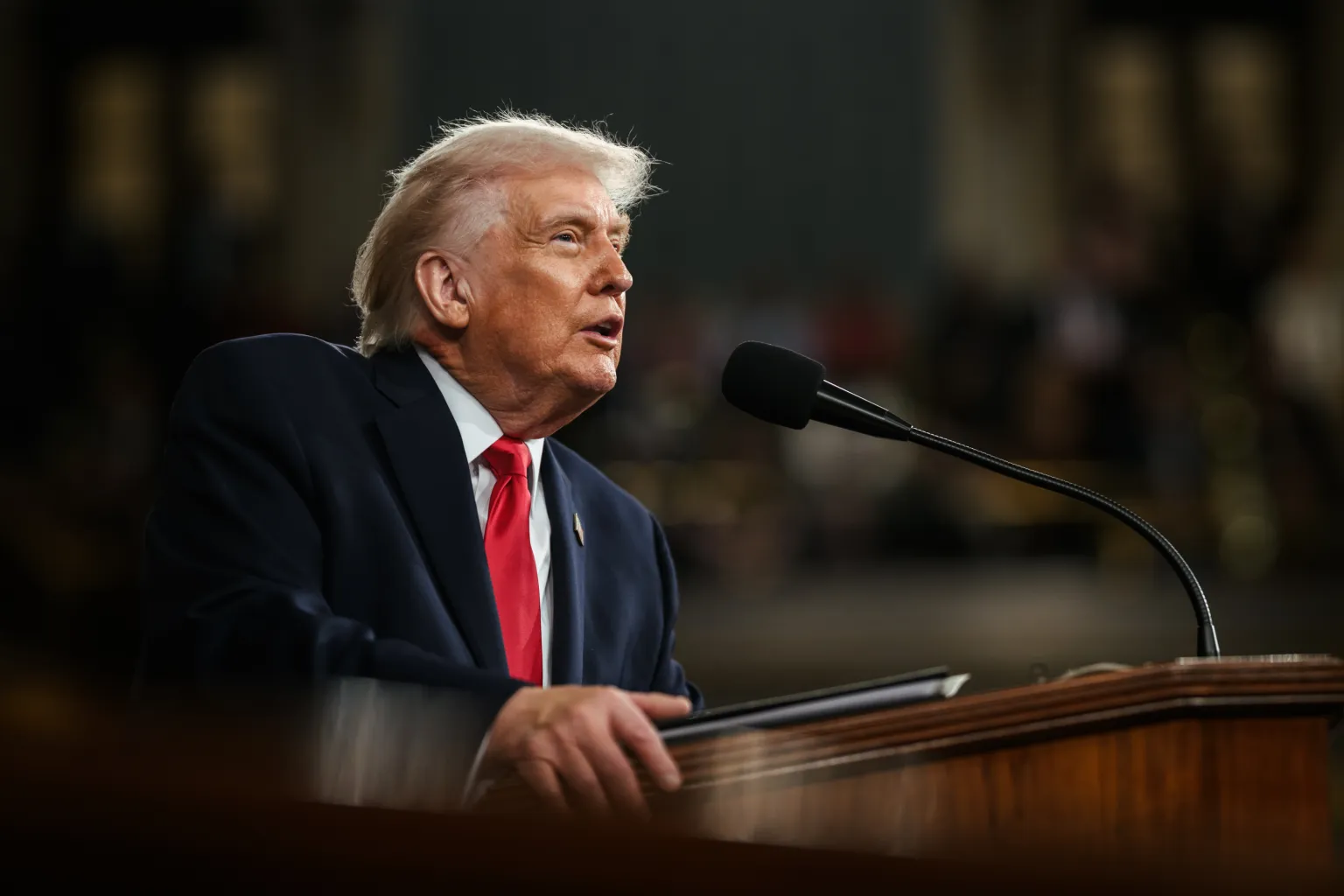
There is a pattern hiding in plain sight inside two centuries of American presidential history. It is not complicated. It is not flattering to the experts who missed it in real time. And it suggests that the most reliable indicator of a transformative presidency is not approval ratings, policy coherence, or the editorial consensus of major newspapers.
It is the shape of the opposition.
Not its intensity alone—every failed president generates enemies. The diagnostic is more specific: transformative presidents produce two intense minorities simultaneously. Fervent supporters who believe the man is remaking the world. Fervent opponents who believe he is destroying it. Both convinced. Both loud. Both, in their fashion, correct about the scale of what is happening—just not about the valence.
The presidents that history has forgotten generated neither. They were liked, broadly and blandly, by people who had no strong reason to love or hate them. They managed. They presided. They left.
Donald Trump, in the second year of his second term, fits the first profile with a precision that should give even his critics pause. Not because their criticisms are necessarily wrong—the criticisms of transformative presidents are often valid. The question worth asking is whether the structure of the response to his presidency matches the pattern we have seen before.
It does.
The Managers and the Transformers
Begin with the counterexamples—the presidents whose reputations should warn us against mistaking smooth tenure for lasting consequence.
Calvin Coolidge governed from 1923 to 1929 with approval ratings that would make any modern president envious. He was steady, predictable, and almost universally respected by the political class. He delivered what people wanted: stability, prosperity, and quiet. Historians now rank him somewhere between 27th and 32nd, which is a polite way of saying he is remembered primarily as the man who preceded catastrophe. The 1929 crash did not happen on his watch, but the conditions for it matured there. Coolidge’s popularity was real. Its durability was not.
Dwight Eisenhower presents a more complex case—he ranks higher today, credited with the Interstate Highway System and managing Cold War tensions without igniting them. But Eisenhower’s greatness, to the extent historians grant it, was the greatness of a general running a holding action. He presided over a prosperous decade without transforming it. His approval averaged above 65 percent across two full terms. Nobody marched in the streets against him. Nobody lit fires for him either. The decade of the 1950s is remembered fondly and studied seriously, but what it produced was the preconditions for the convulsions of the 1960s. Eisenhower managed well. He transformed little.
These men were genuinely liked. They kept the country stable. They listened to what the public wanted and delivered it. That is not nothing. But it is also not what history calls greatness.
James K. Polk illustrates the inverse. He served one term, 1845 to 1849, was broadly disliked in his own time—expansionist, aggressive, willing to court war with Mexico—and oversaw the addition of more territory to the United States than any president except Jefferson. He was elected narrowly, governed without concern for his standing, and was exhausted and dead within three months of leaving office. He had real enemies. He had real advocates. He moved the country. Historians consistently rank him in the top fifteen.
The pattern holds across eras. Presidents who generate intense bilateral opposition—loved fiercely, hated fiercely, rarely ignored—cluster at the top of historical rankings. The ones who kept their heads down and their approval ratings up cluster in the middle, which is historiography’s version of a polite burial.
The explanation for this is not mystical. It is structural. A president who optimizes for approval cannot simultaneously be disrupting the people who measure and report on approval. The two things are mechanically incompatible. High sustained popularity is not evidence of effectiveness. In a country with established interests, entrenched institutions, and powerful factions invested in the existing order, high sustained popularity is evidence of not threatening anyone who matters.
Transformative presidents do not have that luxury. Their programs require rearranging something that someone else wants left alone. The price of rearrangement is opposition. The fiercer the rearrangement, the fiercer the opposition. The lovers-and-haters distribution is not incidental to greatness. It is mechanically produced by it.
The Great Ones, Hated in Their Time
Abraham Lincoln won the 1860 election with 39.8 percent of the popular vote. He did not appear on the ballot in ten Southern states. The response to his election was secession before he had taken a single official action as president. Northern critics called him a tyrant for suspending habeas corpus; opponents on both sides compared him to a dictator; his own party was fractured between radicals who thought he moved too slowly on emancipation and conservatives who feared where he was going at all. By the summer of 1864, his reelection was considered so unlikely that he privately committed to paper his expectation of losing.
History ranks him first. Unanimously. By significant margins. The soldiers who fought for the Union adored him—calling him “Father Abraham” in letters home—even as the political class treated him as an embarrassment. It was not the political class that was right.
Harry Truman left office in January 1953 with a 32 percent approval rating—lower than any president in the modern polling era at departure, including those who resigned. At his lowest point, in 1952, Gallup recorded him at 22 percent. Critics on the left called him a warmonger for Korea. Critics on the right called him soft on communism and surrounded by spies. He fired the most celebrated general in the country during an active war, an act that struck many as pure hubris. Eisenhower campaigned against him on three words: “Korea, Communism, Corruption.”
He now ranks in the top ten in virtually every major survey. The Truman Doctrine, the Marshall Plan, NATO, the Berlin Airlift, the desegregation of the armed forces—this is the architecture of the post-war liberal order that structured the next half century of American foreign policy. When Dean Acheson, his Secretary of State and the primary intellectual architect of containment, was savaged by Joe McCarthy as the “Red Dean” presiding over a “college of cowardly communist containment,” the two men understood that they were being attacked by people who had a stake in the world they were building not being built. Acheson’s memoir of the period—Present at the Creation—won the Pulitzer Prize in 1970. McCarthy is remembered as a cautionary tale.
Franklin Roosevelt averaged high approval across twelve years, but the intensity of elite opposition to him was extraordinary and in some ways unprecedented. Business leaders called him a socialist and plotted—this is documented, not apocryphal—a corporate coup in 1934, recruiting former Marine General Smedley Butler to lead it. Roosevelt tried to pack the Supreme Court, a move even his closest allies considered constitutionally dangerous. He relocated Japanese Americans into internment camps, a decision history has condemned without reservation. He also restructured the relationship between the American state and its citizens more fundamentally than anyone since Lincoln, built the alliance that defeated the Axis powers, and created the institutional infrastructure of the post-war world. He ranks second or third in every major survey.
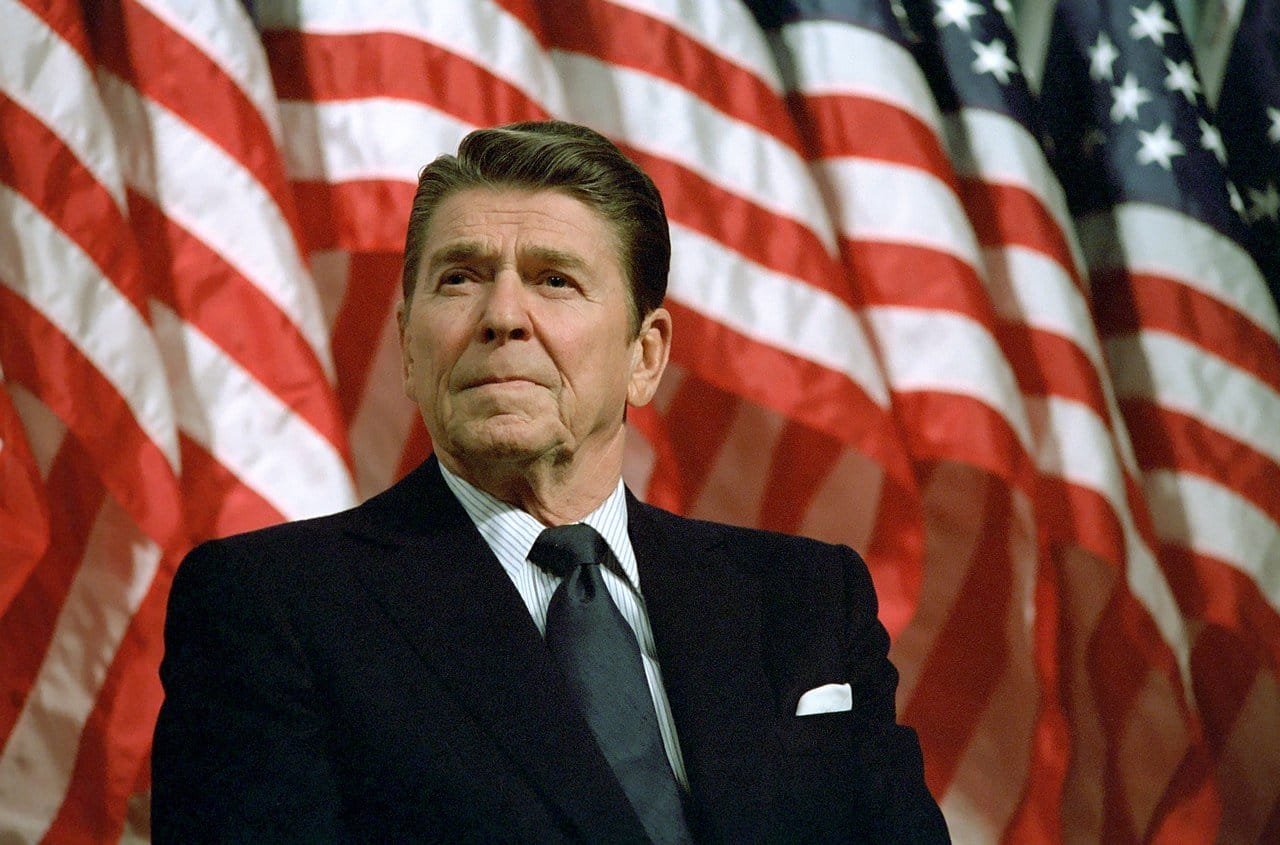
Ronald Reagan was mocked, dismissed, and genuinely feared in roughly equal measure. Intellectuals found him incurious—an actor playing president, thin on detail, operating on instinct and index cards. Union leaders despised him; his firing of the striking air traffic controllers in 1981 and his subsequent decertification of their union sent a message that reverberated through labor relations for decades. He called the Soviet Union an “evil empire” at a moment when détente was the respectable position, and serious foreign policy analysts worried in print that his recklessness would stumble into nuclear war. He proposed a missile defense system that the arms control community called a dangerous provocation. He left office popular, but the ultimate verdict on the central bet of his presidency—that confronting the Soviet Union directly and relentlessly would accelerate its collapse—was not available until the Wall came down in 1989 and the USSR dissolved in 1991. Three years after he left office, history closed the argument in his favor.
These men share something beyond their unpopularity. In each case, the hatred directed at them was substantive. It was not primarily personality-based irritation with a difficult man. It was opposition from people and institutions with genuine material stakes in the world being rearranged. Slaveholders and their political allies, isolationist Republicans, entrenched banking interests, organized labor bureaucracies, the foreign policy establishment’s devotees of détente—each faction had concrete reasons to resist what these presidents were doing. The opposition was fierce because the disruption was real.
That distinction matters enormously for what follows.
The Lone Voices Who Were Right
There is a secondary feature of transformative presidencies that receives less attention than it deserves: in each case, a small cohort of serious, credible observers saw what was happening clearly before the consensus did. They were not cheerleaders. They were analysts—people who examined the evidence available at the time and reached conclusions that the majority dismissed. Their presence, and their eventual vindication, is part of the pattern.
Lincoln had Frederick Douglass. Douglass came to the Lincoln White House in 1863 as a skeptic—frustrated at what he considered the president’s agonizing caution on emancipation—and left a convert. He grasped, in real time, what Lincoln’s combination of political patience and moral clarity was actually accomplishing: not the fastest possible abolition, but the durable kind—one that would survive the peace. The political class saw a fumbling, equivocating president. Douglass saw the architecture of something permanent.
Truman had Dean Acheson, who understood from the earliest days that they were building something that would outlast both of them—the title of his memoir, Present at the Creation, was not false modesty but a genuine claim about historical significance. Acheson was publicly reviled alongside Truman, attacked as a communist sympathizer, his resignation demanded repeatedly. He stayed. He believed he knew what they were doing. He was right. The policies for which they were vilified became, within two decades, the bipartisan orthodoxy that every subsequent administration inherited.
Reagan had Norman Podhoretz and Jeane Kirkpatrick. Podhoretz, the editor of Commentary, had spent the 1970s arguing in the face of elite consensus that the Soviet Union was not a permanent feature of the international landscape to be accommodated but a failing system that could be broken. Kirkpatrick’s 1979 Commentary essay, “Dictatorships and Double Standards”—which Reagan read and which led directly to her appointment as UN Ambassador—argued that morally serious anti-communism required a hardheaded willingness to confront the Soviet system rather than manage it. When Reagan took office calling the USSR an evil empire, the foreign policy establishment heard a cowboy making inflammatory speeches. Podhoretz and Kirkpatrick heard a president who had absorbed the argument and intended to act on it. They were right. The consensus was wrong.
Each of these figures did something important: they provided an analytical framework in which the president’s disruptive behavior made sense as strategy rather than impulse. They explained what the lovers saw and the haters feared. And they were, in each case, vindicated.
The Diagnostic Applied to President Trump
The elite opposition to Donald Trump is not, at its core, about his personality—though the personality amplifies every reaction. It is opposition from institutions that have a material stake in the specific arrangements he is disrupting.
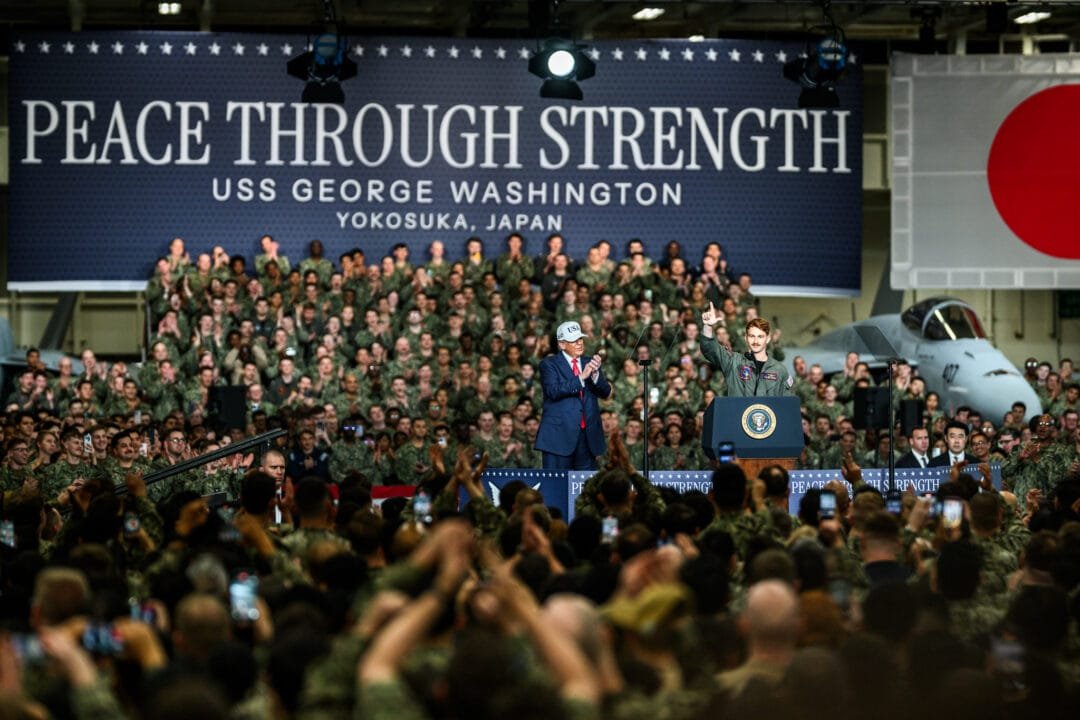
The foreign policy establishment built its careers on a model of multilateral consensus, diplomatic gradualism, and engagement with adversaries. Trump’s second-term approach—which has included direct military strikes against Iranian nuclear infrastructure and the extraction of Nicolás Maduro from Venezuela—is not a modification of that model. It is a repudiation. The people who spent decades arguing that such actions were impossible, counterproductive, or dangerous are not reacting to a tone problem. They are reacting to evidence that their framework may have been wrong. An Iran whose nuclear program and general ability to project military strength is materially degraded, whose regional proxies are weakened, and whose government is reeling does not vindicate the argument for patient multilateral engagement. A Venezuela where the hemisphere’s most entrenched authoritarian has been removed suggests that the Panama model—which the same establishment considered a historical anomaly never to be repeated—can be repeated.
The trade and economic establishment built its consensus around globalization, comparative advantage, and the conviction that supply chain integration was irreversible. The tariff architecture of Trump’s second term is not a refinement of that consensus. It is a direct bet against it—a wager that manufacturing capacity, energy independence, and supply chain sovereignty are worth paying for, and that the long-run arithmetic favors the nation that can produce what it consumes over the one that can only consume what others produce. There is an even more radical proposition embedded in the tariff project: that the income tax, the instrument through which the federal government has taxed American labor and productivity since 1913, could be substantially replaced by consumption taxes and tariffs—effectively shifting the burden from American producers to foreign ones. This is not conventional economics. Neither was the Louisiana Purchase. Neither was the New Deal. Neither was Reagan’s supply-side pivot.
The energy strategy is perhaps the clearest case of deliberate geopolitical disruption. The United States, transformed by shale technology into the world’s largest oil and gas producer, has under Trump’s second term pursued a policy of aggressive production and export designed explicitly to flood global energy markets and suppress prices. The mechanism by which this weakens adversaries is direct and not complicated: Russia’s government budget requires oil above $70 a barrel to remain solvent. Iran’s revolutionary government is similarly dependent on energy revenue to fund its proxy network. A sustained American production surge that holds prices below those thresholds does to these regimes what the military cannot do without war—it starves them. Reagan understood this logic, pressing Saudi Arabia in the mid-1980s to increase production and help collapse the Soviet hard-currency earnings that kept the Cold War military machine funded. Trump is applying the same logic with the leverage that American production capacity now makes possible.
The artificial intelligence and industrial policy dimension is longer-range but structurally significant. Trump’s second-term approach to AI—removing the regulatory apparatus that his predecessor had begun constructing around large model development, clearing the path for American companies to build at scale without the friction that European and progressive regulatory frameworks would have imposed—is a bet that the country that builds the most powerful AI first will occupy a position relative to the rest of the world analogous to the position Britain occupied after the industrial revolution. The consensus view among AI safety advocates is that this is reckless. The contrarian view is that American restraint would simply hand the advantage to Chinese development programs operating under no such constraints, and that the risks of American AI dominance are substantially smaller than the risks of the alternative.
These are serious arguments on both sides. But the structure of the opposition—institutional, intense, materially motivated—is recognizable. It is what you get when someone is actually rearranging things that matter.
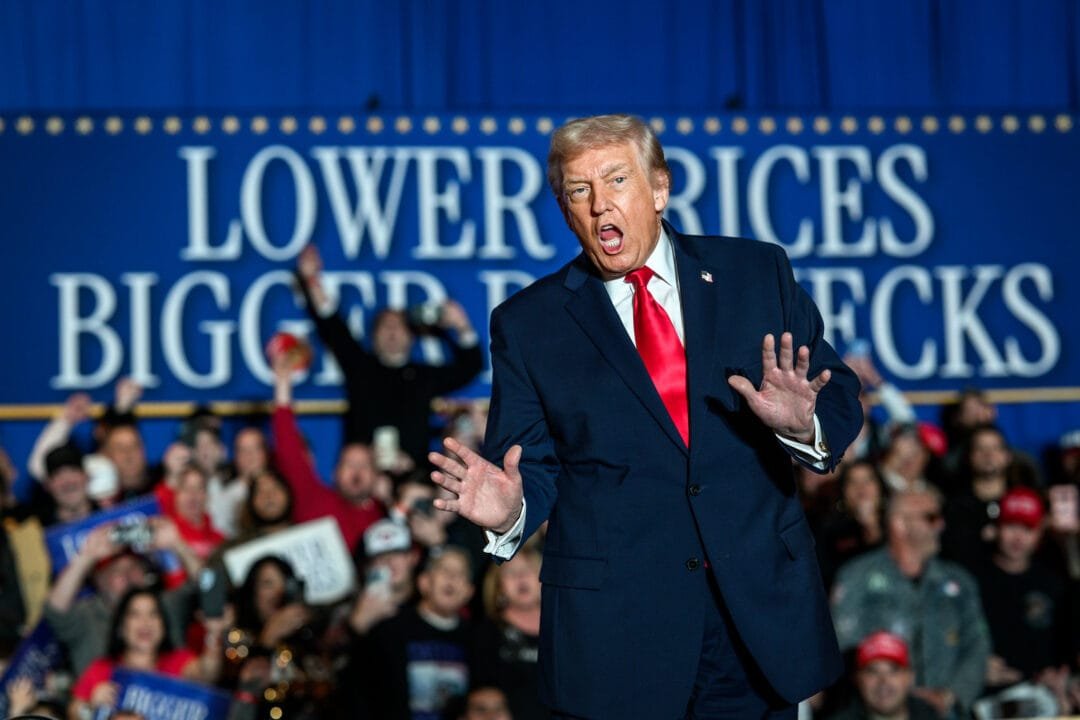
The support is equally diagnostic. Trump’s base is not mildly approving. It is committed in ways that baffle conventional political analysis—the kind of commitment that survives impeachments, indictments, and a bullet graze in Butler, Pennsylvania, that produced one of the most indelible images in recent American political history. A man in his late seventies, blood tracking down his face, rising from the stage floor with his fist in the air. The image traveled because it confirmed what his supporters already believed and what his opponents most feared: that the force animating this presidency was not easily extinguished.
Trump’s Contemporary Contrarians
The pattern has its contemporary version of the lone-voices cohort, and they are worth naming.
Victor Davis Hanson, the classicist and military historian at the Hoover Institution, has been the most rigorous and consistent scholarly voice making the historical-pattern argument. His framing of Trump’s second-term foreign policy as a “reckoning”—the arrival, after decades of deferred consequences, of an American willingness to actually enforce the international order it had built—is an analytical claim, not a political one. Hanson’s point is that the alternative to Trump’s Venezuela operation and Iran strikes is not the peaceful status quo the consensus preferred; it is the continued metastasis of the conditions that made those operations eventually necessary. Viewing the operations as disruptive misses that the prior equilibrium was already broken. This is precisely the argument Acheson made about containment when the establishment accused him of warmongering—that the choice was not between confrontation and peace, but between confrontation now and worse confrontation later.
Chamath Palihapitiya, the venture capitalist billionaire and co-host of the All-In podcast, has made the economic and technological case from a perspective entirely outside the political right. He is representative of a group of highly successful businessmen and tech leaders who have switched parties to support Trump. His argument is structural: the manufacturing decline, financial sector dominance, and supply chain vulnerability that Trump’s tariff and industrial policy agenda is attempting to address represent genuine national security threats, and the consensus that permitted them to develop was not neutral expertise but captured ideology serving the interests of those who benefited from the existing arrangement.
These are not mere partisan cheerleaders. Hanson is a scholar with a forty-year body of work on military history and the patterns of Western civilization. Palihapitiya, a former Democrat fundraiser, built one of the most successful venture portfolios of the last two decades from a position of analytical discipline. When figures of that caliber and independence reach similar conclusions about a presidency, the question worth asking is not whether they are biased. It is what they are seeing that the consensus is missing.
The answer, in both cases, is the same thing Acheson saw in Truman and Kirkpatrick saw in Reagan: a president who had absorbed a coherent theory of American power and was executing it regardless of what it cost him in approval.
What History Cannot Yet Tell Us
Honest accounting requires acknowledging what the pattern cannot prove.
Polarization is necessary but not sufficient for historical greatness. A president can generate intense opposition without generating transformation—if the disruption fails, if the bets come in wrong, if the structural changes do not survive the administration that made them. The historical verdict on Lincoln was not available in 1862, when the war was going badly and his political support was fragmenting. The verdict on Truman was not available in 1952. The verdict on Reagan’s Soviet gambit was not available until the Berlin Wall came down, three years after he left office.
Trump’s tariff architecture may produce the manufacturing revival its architects envision, or it may produce inflation that erodes the wage gains it was meant to protect. The Iran operations may have broken Iran’s terror grip on the Middle East, or they may have set in motion dynamics whose full consequences are not yet visible. The Venezuela extraction may prove a model for a new American posture in the hemisphere, or it may prove an exception. The bet on unrestrained AI development may produce the decisive American advantage its proponents anticipate, or the risks that safety advocates identify may prove real in ways that are difficult to reverse.
These questions are genuinely open. It is too early to close them.
What is not too early to observe is the structure of the response to this presidency. The intensity of the opposition, the specificity of its institutional sources, the fervor of its supporters, the scope of what is actually being attempted, and the presence of serious, credible, non-partisan analysts arguing that the historical signal is real—all of this matches what preceded consequential presidencies before. It is not a guarantee. But the base rate of transformative disruption producing transformative consequence is substantially higher than the base rate of smooth, popular management producing it.
History is not democratic. It does not weight the consensus view more heavily than the minority view simply because more people hold it. It weights results.
The Uncomfortable Implication
The hardest thing the lovers-and-haters diagnostic asks of observers is this: to separate the question of whether a presidency is consequential from whether it is correct.
Lincoln’s suspension of habeas corpus was a genuine constitutional violation. FDR’s internment of Japanese Americans was a genuine moral catastrophe. Truman’s atomic bombings remain contested by serious historians on ethical grounds. Reagan’s Central American policies involved alliances with governments that committed documented atrocities. These facts coexist with top-ten historical rankings because historical consequence is not the same as historical virtue. Greatness, in the presidential sense, means transformation—not moral perfection.
This is uncomfortable for both sides of the Trump debate. For critics, it means that the intensity of their opposition may be evidence for historical consequence rather than against it. For supporters, it means that historical vindication, if it comes, will not be an absolution of everything—because for the presidents who preceded him, it never was.
What the pattern suggests, coolly and without editorial endorsement, is that the era of lukewarm management is not the era that gets remembered.
The presidents who rated well in the polls and left the world roughly as they found it are not the ones whose portraits end up in the permanent galleries of historical consequence.
The ones who had lovers and haters—who moved institutions, disrupted establishments, produced small cohorts of serious analysts who recognized what was happening before the consensus did—are the ones the historians keep arguing about.
That argument, in Trump’s case, has barely begun.