In Part 1, The Island Paradox, we examined the paradox of Easter Island and Iceland, where both islands faced isolation, resource limits, and catastrophic challenges, yet one collapsed while one thrived. Geographic determinism can’t explain the divergence because the environmental variables favored Easter Island, not Iceland, and the difference was culture—specifically, the ability to generate and test new ideas, to adapt when conditions changed, to build institutions that preserved knowledge across generations. Geography shaped the difficulty of survival, but ideas determined whether societies met that challenge.
Now we meet the physicist who explains why Diamond’s framework isn’t just incomplete—it’s backwards.
The Primacy of Explanations
David Deutsch is a quantum physicist who pioneered quantum computing, and his 2011 book The Beginning of Infinity builds a sweeping theory of knowledge creation, progress, and human potential. At its core is a simple claim: good explanations drive everything. What’s a good explanation? One that is “hard to vary” while still accounting for the phenomenon it addresses—change the details and the explanation fails, contrasting with bad explanations that can explain anything and therefore explain nothing.
Ancient creation myths are bad explanations because they attribute the universe to gods or supernatural forces that can be adjusted to fit any observation—if the sun rises, the god is pleased; if it doesn’t, the god is angry. The explanation accommodates any outcome by varying the god’s mood, explaining nothing. The Big Bang theory is a good explanation because it makes specific predictions about cosmic microwave background radiation, the abundance of light elements, and the expansion of space, and altering the theory’s details causes those predictions to fail. You can’t adjust the Big Bang to explain a static universe or a contracting one without destroying the theory entirely, making it hard to vary.
This distinction matters for history as much as physics since bad historical explanations accommodate any outcome by varying their details while good historical explanations make specific claims that can be tested against evidence. Good explanations have reach—they extrapolate beyond the observations that inspired them, with Newton’s laws of motion explaining falling apples and predicting planetary orbits while Einstein’s general relativity explained Mercury’s orbit and predicted gravitational lensing, which wasn’t observed until years later. The better the explanation, the farther it reaches.
Progress happens when we create new knowledge through conjecture and criticism—we guess solutions to problems, test those guesses, criticize them, and refine or reject them. The process is infinite because every solution creates new problems, which is the “beginning of infinity”—not that progress is endless, but that the capacity to solve problems through knowledge creation has no inherent limit. This framework, inherited from philosopher Karl Popper, explains why the Enlightenment mattered: it wasn’t a collection of specific inventions or discoveries but the creation of a culture that valued criticism, questioned authority, and expected knowledge to grow. That culture enabled the explosion of progress that followed.
Deutsch applies this to history, and when he does, Diamond’s biogeographical determinism collapses.
The “Just-So Story” Problem
Diamond’s framework suffers from what Deutsch calls “just-so stories”—explanations that seem plausible but can be easily varied to explain opposite outcomes. Consider the llamas: Diamond argues that Andean civilizations couldn’t fully exploit llamas because the animals were smaller and less useful than Eurasian horses, with geography limiting what they could do. But Deutsch points out that this is circular reasoning since horses weren’t always useful—they started as wild, small, skittish animals that humans bred for size, strength, and temperament while developing harnesses, saddles, and techniques for using horses in agriculture and warfare through a process that took ingenuity, not just proximity to the right species.
Llamas could have been bred similarly and used more extensively since the resources existed, but the knowledge didn’t spread. Diamond’s answer points back to geography—the north-south axis of the Americas slowed diffusion and climatic barriers prevented innovation from spreading—but this doesn’t explain why some societies innovate within constraints and others don’t; it just restates the problem in geographic terms.
The “just-so” nature becomes clear when you flip the scenario: if Andean civilizations had domesticated llamas extensively and used them to build empires that rivaled Eurasia, Diamond could have told a different story about how the llama’s adaptation to high altitude gave Andean civilizations a unique advantage since no other domesticable animal could thrive in such harsh terrain, explaining Andean dominance. Both stories sound plausible and invoke geography, but they’re fundamentally empty because they can explain any outcome.
That’s a bad explanation.
The Polynesian Counter-Example
The same flaw appears in Diamond’s treatment of the Pacific, where he points to the ocean as a barrier that prevented contact between civilizations. But Deutsch notes that Polynesians overcame that barrier through sophisticated navigation and seafaring, settling islands thousands of miles apart using techniques so advanced that Europeans couldn’t replicate them for centuries. If Polynesians hadn’t developed those skills, Diamond could have invoked the Pacific as an “ultimate geographic barrier” that prevented settlement, but since they did develop them, the story becomes about how certain environments demanded innovation. The explanation adjusts to fit the outcome, which is the core problem with biogeographical determinism: it treats geography as an independent variable that causes outcomes, but geography only matters after someone has an idea for how to exploit or overcome it.
Without the idea, mountains are barriers; with the idea, they’re defensible positions or trade routes. Without the idea, oceans isolate; with the idea, they’re highways. The primeval distribution of horses or llamas or flint or uranium affects only the details, and only after someone has an idea for how to use them—ideas determine which biogeographical factors matter and what effects they have.
Diamond has it backwards.
Prophecy Versus Prediction
Deutsch distinguishes between prediction and prophecy, where predictions are rational forecasts based on present knowledge while prophecies purport to know things that cannot be known because they ignore the growth of knowledge. Paul Ehrlich’s 1968 book The Population Bomb was a prophecy, predicting mass famines within a decade, hundreds of millions of deaths, and civilizational collapse—none of which happened because his forecast assumed that agricultural productivity, food distribution, and population growth would remain static. He didn’t account for the Green Revolution, which dramatically increased crop yields through new varieties, irrigation, and fertilizers, and he couldn’t account for it because the knowledge hadn’t been created yet.
Prophecy says: “If we stop solving problems, we’re doomed,” which is trivially true since of course we’re doomed if we stop solving problems. The question is: will we stop? Diamond’s biogeographical determinism is prophecy dressed as science, saying “These societies failed because they lacked the right geography while others succeeded because they had it,” with the implicit forecast being that without favorable geography, societies can’t escape poverty or stagnation. But this ignores knowledge creation, treating human societies as static entities responding mechanically to environmental stimuli.
Iceland proves the prophecy false. The geography was terrible, the catastrophes were overwhelming, yet the society survived and eventually thrived because it created knowledge—legal institutions, trade networks, literacy, adaptive strategies—that didn’t come from biogeography but from humans solving problems. The difference between prophecy and prediction is the difference between fatalism and agency: prophecy says your fate is sealed by forces beyond your control, while prediction says you can change outcomes by creating new knowledge.
The Spaceship Earth Trap
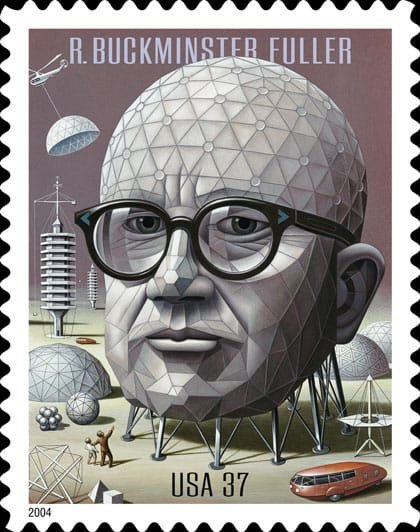
Diamond’s framework aligns with the “Spaceship Earth” metaphor, popularized by Buckminster Fuller in the 1960s, which portrays Earth as a closed vessel with finite resources where we’re passengers on a lifeboat and our survival depends on rationing what we have because there’s nowhere else to go. The metaphor is seductive—it feels responsible, cautious, realistic—but it’s also wrong.
 Earth isn’t a spaceship equipped with everything we need; it’s actively hostile, and without knowledge, humans die from cold, heat, predators, disease, and starvation. The “resources” we extract from Earth—oil, metals, food—aren’t readymade gifts but creations of knowledge: oil was useless until we figured out how to refine it, transport it, and convert it into energy; iron ore was rocks until we learned to smelt it; uranium was just heavy metal until we understood nuclear fission. Resources aren’t discovered—they’re invented, and the limiting factor is knowledge, not stuff.
This distinction destroys the Spaceship Earth framework because if resources are finite and fixed, then consumption leads inevitably to depletion and collapse, and sustainability means maintaining equilibrium—using only what regenerates naturally, never exceeding carrying capacity. This is what environmentalists mean when they invoke Easter Island as a warning: the islanders exceeded their carrying capacity and collapsed, and we’re doing the same on a global scale. But this analogy is exactly wrong, as Deutsch points out, since Easter Island’s population didn’t collapse because it ran out of trees but because they couldn’t generate the knowledge needed to solve the tree problem.
Easter Island looks like a Spaceship Earth failure—finite island, finite trees, inevitable collapse once the resources run out—but that’s not what happened. The collapse occurred because the society couldn’t generate the knowledge needed to solve its problems: they could have planted new trees, built ocean-going canoes to trade with other islands or relocate, or shifted from prestige competition through statue-building to resource management. The knowledge required for those solutions existed elsewhere in the world but didn’t reach Easter Island or was rejected when it did. The failure wasn’t environmental but epistemological—the society was static and couldn’t adapt, so when faced with a novel problem of disappearing forests, it kept doing what it had always done until the system collapsed.
Iceland faced worse environmental conditions than Easter Island, yet Icelanders created knowledge—fishing techniques, trade routes, legal institutions, literacy—and when Laki poisoned the soil and killed the livestock, they adapted by shifting to fishing, reorganizing land holdings, and accepting external aid. They survived because they could solve problems faster than new problems emerged, while the Spaceship Earth metaphor treats sustainability as maintaining things as they are, which is what static societies do by suppressing change, enforcing tradition, and punishing innovation. That’s what “sustainable” meant on Easter Island—keep building moai, keep cutting trees, maintain the status hierarchy—and the society sustained its culture right into extinction.
Dynamic societies are “unsustainable” by that definition since they consume resources at rates that seem reckless, transform environments, and disrupt ecosystems, yet they survive catastrophes that destroy static societies because they create knowledge. The British Isles were once covered in vast forests that provided “sustainable” resources for millennia, and then the population grew and the forests disappeared. If biogeographical determinism held, Britain would have collapsed like Easter Island, but instead the British developed coal mining, trade networks, agriculture, and eventually industrial technologies that made them wealthier and more populous than ever.
Britain didn’t sustain its forest economy—it abandoned it. The society was dynamic enough to create new knowledge when old resources ran out: coal replaced wood, oil replaced coal, and nuclear and renewable energy might someday replace oil. Each transition seemed “unsustainable” at the time, and each required creating knowledge that didn’t exist when the previous resource began depleting. The difference wasn’t resources but knowledge—Britain became “unsustainable” and thrived while Easter Island remained “sustainable” and died.
The Dehumanizing Framework
Deutsch calls Diamond’s biogeographical determinism “dehumanizing” because it reduces human beings to passive recipients of environmental fortune and treats ideas as epiphenomena—surface decorations on deeper material causes. But ideas are the ultimate causation since geography matters only insofar as it creates problems that humans must solve with ideas, and the same environment can lead to radically different outcomes depending on whether the society generates good explanations or bad ones.
Athens and Sparta shared similar geography, yet one became the birthplace of democracy, philosophy, and rational inquiry while the other became a militaristic state that suppressed innovation.
The difference wasn’t location—it was culture.
Both city-states faced the same Mediterranean climate, similar agricultural constraints, and access to the same trade routes; both were Greek-speaking, shared cultural roots, and worshiped similar gods, yet their trajectories diverged completely. Athens developed institutions that protected dissent—the Assembly allowed citizens to debate policy, philosophers questioned everything from physics to ethics without fear of execution (usually), and the culture rewarded cleverness, rhetoric, and innovation. This openness enabled Athens to generate knowledge that transformed civilization: democracy, logic, geometry, drama, history as rational inquiry rather than mythology.
Sparta built a society designed to prevent change, raising children communally to enforce conformity, discouraging innovation, and restricting trade and commerce while optimizing for military prowess and social stability. It succeeded at both for centuries and also stagnated, so when Sparta eventually fell, it left almost nothing behind except cautionary tales about what happens when you suppress knowledge creation.
Geography didn’t determine these outcomes. Ideas did.
The Renaissance occurred in Italian city-states with no particular geographic advantages—it happened because those cities developed cultures that valued art, scholarship, trade, and competition. Florence wasn’t blessed with special resources or favorable terrain but with wealth from trade, competition between powerful families that patronized artists and thinkers, and relative freedom from centralized authority. Those conditions enabled knowledge creation, and the Renaissance could have happened anywhere with similar cultural conditions; it happened in Italy because Italian cities created those conditions first.
The Enlightenment began in Europe, not because European geography was unique, but because European culture—after centuries of wars, plagues, and upheavals—stumbled into institutions that protected criticism and rewarded innovation. The printing press enabled rapid knowledge diffusion, universities provided spaces for debate, the Reformation shattered religious uniformity and forced tolerance of dissent, and scientific societies formalized criticism and experimentation. None of this required specific geography but specific ideas about how to organize society and pursue knowledge.
These turning points in human history can’t be explained by geography—they require understanding ideas, culture, institutions, and the willingness to question authority. Reducing them to maps and animals and axes of continental drift erases the only variable that matters: human creativity.
Why Still Diamond Matters
Diamond deserves credit for demolishing racist explanations for historical inequality, showing how environmental factors influenced development, and providing a materialist framework that replaced lazy cultural stereotypes. But he went too far: by elevating geography to determinism, he created a new fatalism where if your ancestors drew the wrong continent, your civilization was doomed, and if they drew the right one, success was inevitable. This removes agency, treats progress as luck, and offers no path forward except accepting your geographic fate or redistributing resources from the lucky to the unlucky.
Diamond’s framework is a good explanation of proximate causes—why did Eurasians have guns, steel, and horses when Native Americans didn’t?—and geography explains part of it. But ultimate causation lies in ideas: why did some societies exploit their geographic advantages and others didn’t, and why did some overcome geographic disadvantages? Geography can’t answer those questions, but knowledge creation can.
What Comes Next
We’ve established the flaw in geographic determinism—it’s a bad explanation that’s easy to vary, unable to distinguish between success and failure except in hindsight, and blind to the role of ideas and creativity. But if ideas drive progress, what determines which societies generate good ideas and which don’t? What separates dynamic cultures from static ones, what enables some civilizations to create knowledge and others to suppress it, and what does this mean for addressing contemporary challenges from climate change to innovation policy?
In Part 3, we’ll explore Deutsch’s framework for understanding these questions: the distinction between static and dynamic societies, the role of institutions in preserving or destroying knowledge, the infinite potential of human problem-solving, and what this means for our future. The story of human progress isn’t about maps and animals and germs—it’s about explanations, and the societies that figure out how to create better ones are the societies that survive and flourish.