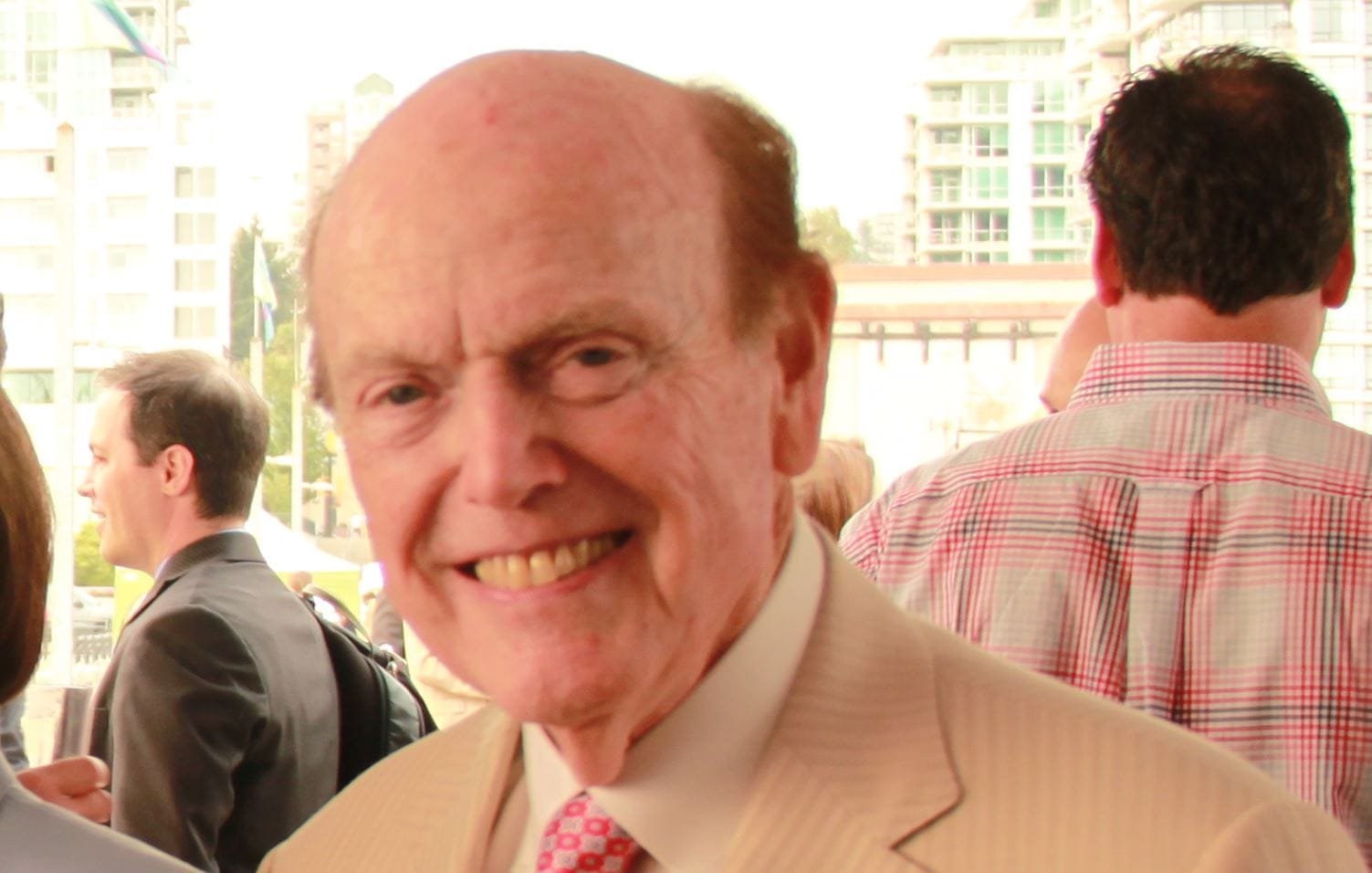
Recently, a real estate company was about to sell a warehouse property to the U.S. Department of Homeland Security (DHS), apparently to be used as an ICE (Immigration and Customs Enforcement) processing facility. That company is owned by the Canadian billionaire Jim Pattison’s privately held corporation, Jim Pattison Group that operates in several industries, including food retail.
Canadian activists used the pending real estate sale as an illogical springboard to attack Pattison, the 97-year-old 11th richest individual in Canada – for his ownership of several grocery and supermarket chains and for allegedly making food “unaffordable.”
This is a typical tactic of the anti-capitalist activists. Pick a well-known wealthy business owner who has been in the news lately and accuse them of causing social problems currently in the public spotlight (food price inflation, housing shortages, general “unaffordability,” unemployment, poverty, etc.) and attribute it to capitalist “greed.”
Then, propose a solution to abolish capitalism: tax the rich, abolish individual rights, and transition to a government-run economy. Rally the troops to protest and boycott the targeted business owner and their companies.
The British Columbia Green Party leader Emily Lowan’s attack of Jim Pattison fits the pattern perfectly.
To draw attention to Pattison, Lowan used the news coverage of the violent clashes between ICE agents and protesters in Minneapolis where ICE shot and killed two protesters. Regardless of these tragic deaths, ICE is a legal government entity tasked to deport illegal immigrants (particularly those with criminal records) by different U.S. administrations since 2002. It is not unethical to sell property to a government department whose task is to protect citizens from criminals (whether they are in the country illegally or not).
But one can question the ethics of activists who use whichever unrelated headline to attack successful entrepreneurs such as Jim Pattison (as Terence Corcoran does in his Financial Post column). I focus on what’s wrong with attacks like that by Emily Lowan.
Lowan attempted to organize a boycott “ to cut [Pattison’s] ties with ICE,” because he is “an evil billionaire … who doubled his net worth during COVID … by price gouging us all on groceries.” She also accused Pattison of “owning our food supply, controlling the market, extorting working families, and using those record profits to buy even more of our lives.”
Not to be content with just organizing a boycott, Lowan proposed public grocery stores (taking a page from New York mayor Zohran Mamdani’s program) as “a practical solution” that would “undercut these monopolies, strengthen local agriculture, provide good paying jobs, make our lives more affordable.” She calculates (unclear how) that could reduce food prices by up to 45%, funded by “a major wealth tax by billionaires like Pattison.”
Lowan’s arguments are seriously flawed. First, they are not based on facts. Jim Pattison or his companies don’t have “ties with ICE.” One of his real estate companies had merely signed a contract to sell a property to DHS (which was canceled after the public backlash). Pattison did not double his net worth during the pandemic. Forbes estimated his net worth to be US$ 6 billion in 2020 and US$9.5 billion in 2023. That increase (not even near 100%) was mostly due to acquisitions across the Jim Pattison Group, not to grocery price increases.
Lowan also ignores the fact that food prices increased during COVID for many reasons, and not because grocery stores jacked up prices: supply chain disruptions (such as factory closures), transportation challenges (such as shipping delays), fuel price increases, poor weather in agricultural areas (drought in Western Canada in 2021, floods in California).
Lowan’s claim that Pattison’s companies “own the food supply” and are monopolies is also false. His companies operate only in food distribution and retail. They are not monopolies, as the competition in the grocery sector is robust in Canada, albeit rural areas may have only one grocery store (or none). These stores are not “extorting families:” they are not using force or threats to make people shop.
Lowan’s “practical solution” of public grocery stores is immoral – because it depends on the use of force (taxing the rich and preventing private stores) of which she accuses Pattison’s grocery chains. Lowan’s proposal fails the morality test also because it ignores facts (and is utterly impractical). Cutting food prices by 45% would require heavy subsidization by taxpayers, chasing away billionaires who are supposed to foot the bill.
Even if other taxpayers could bear the heavy burden, it would not improve operational efficiency of government-run grocery stores where diminished selection, rationed goods and empty shelves are the norm, as anyone who has experienced life in a centrally planned economy can testify.
The worst part of Lowan’s immoral argument is that it completely ignores the value Pattison’s grocery businesses create, not only to him but to his customers (who can shop for plentiful food at local stores), to 59,000 employees (with well-paying jobs across all his companies), and to other businesses who can thrive in areas with value-creating grocery stores.
The anti-capitalist activists use the same arguments not only against grocery stores but against all successful businesses while ignoring the huge role business plays in making our lives better by producing and trading products and services that we need. Penalizing and destroying businesses would make our lives miserable and much poorer.
We should thank billionaire entrepreneurs like Jim Pattison and patronize their businesses – not attack them.