
President Trump graciously posted to Truth Social about what would provide relief from soaring Obamacare premiums—and what would not.
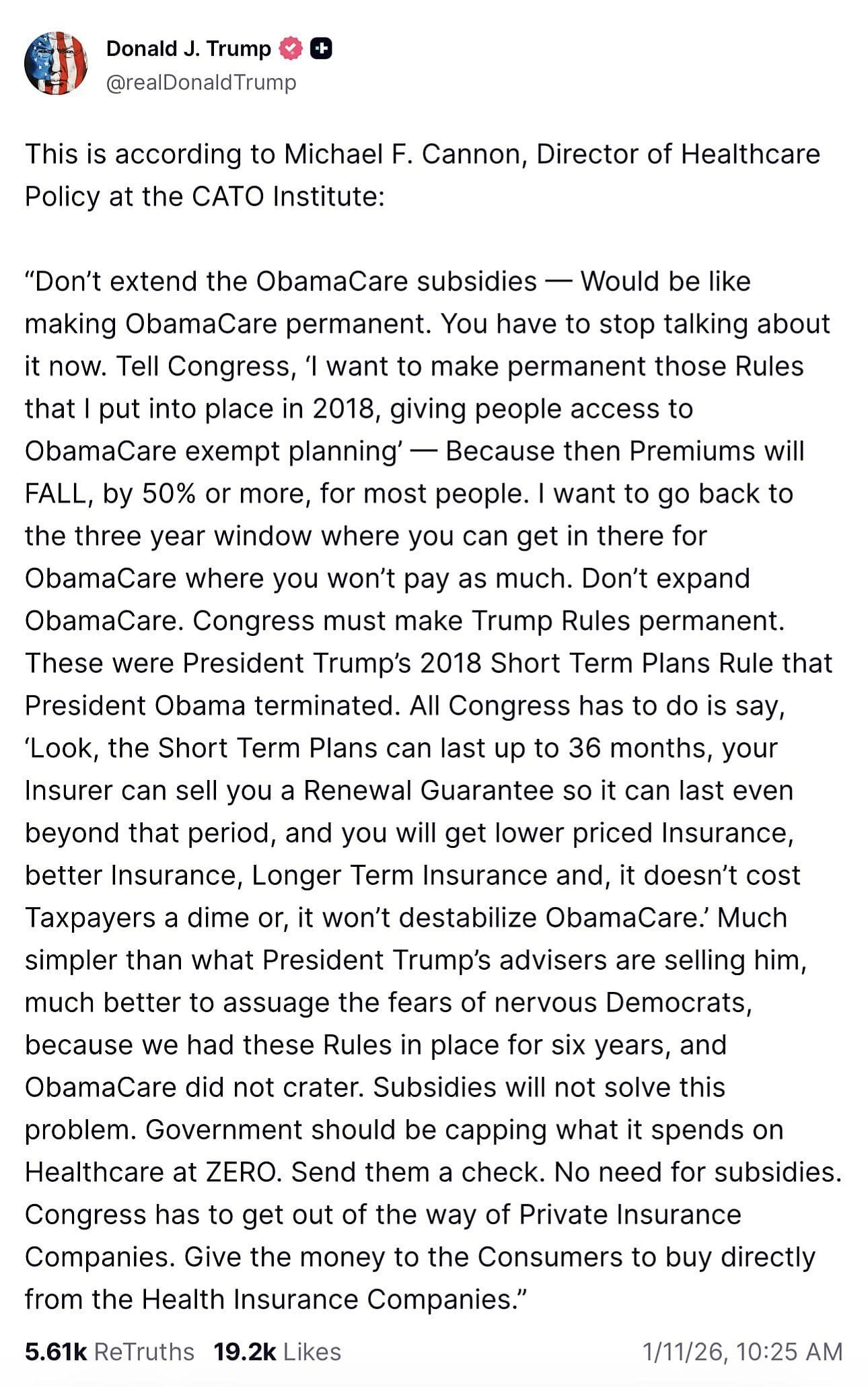
The post is broadly faithful to comments I’ve made about how Congress and states should provide relief from Obamacare:
- Don’t renew any expired COVID-19-era subsidies.
- Don’t convert Obamacare premium subsidies into cash subsidies.
- Make universal and permanent the regulatory relief Trump provided in 2018 and President Obama provided in 2014.
- Let consumers control the money.
Hours after his Truth Social post, Trump threatened to veto a House-passed bill that would renew the expired Covid-era subsidies.
In my latest paper, I explain that when Obamacare threatened access—like its 26 percent premium hikes do today—both Trump and Obama gave consumers regulatory relief by removing barriers to Obamacare-exempt plans. Trump, in the “short term” market. Obama, by exempting US territories from Obamacare’s costliest regulations.
The Congressional Budget Office found that Trump’s 2018 rule made comprehensive coverage available at premiums 60 percent below those of the cheapest Obamacare plans. The Obamacare-exempt plans often had “lower deductibles or wider provider networks.”
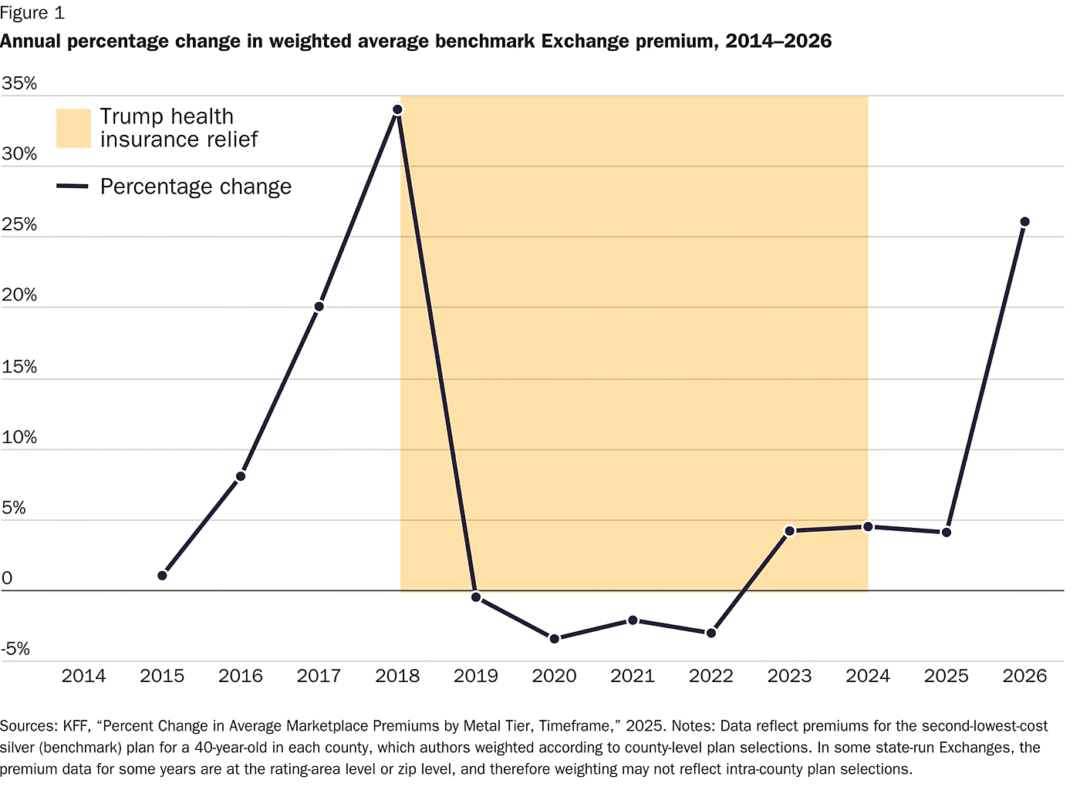
Offering universal, permanent regulatory relief may not disrupt Obamacare as supporters fear. While Trump’s rule was in effect from 2018 to 2024, Obamacare premiums stabilized—spiking only after President Biden revoked the Trump rule.
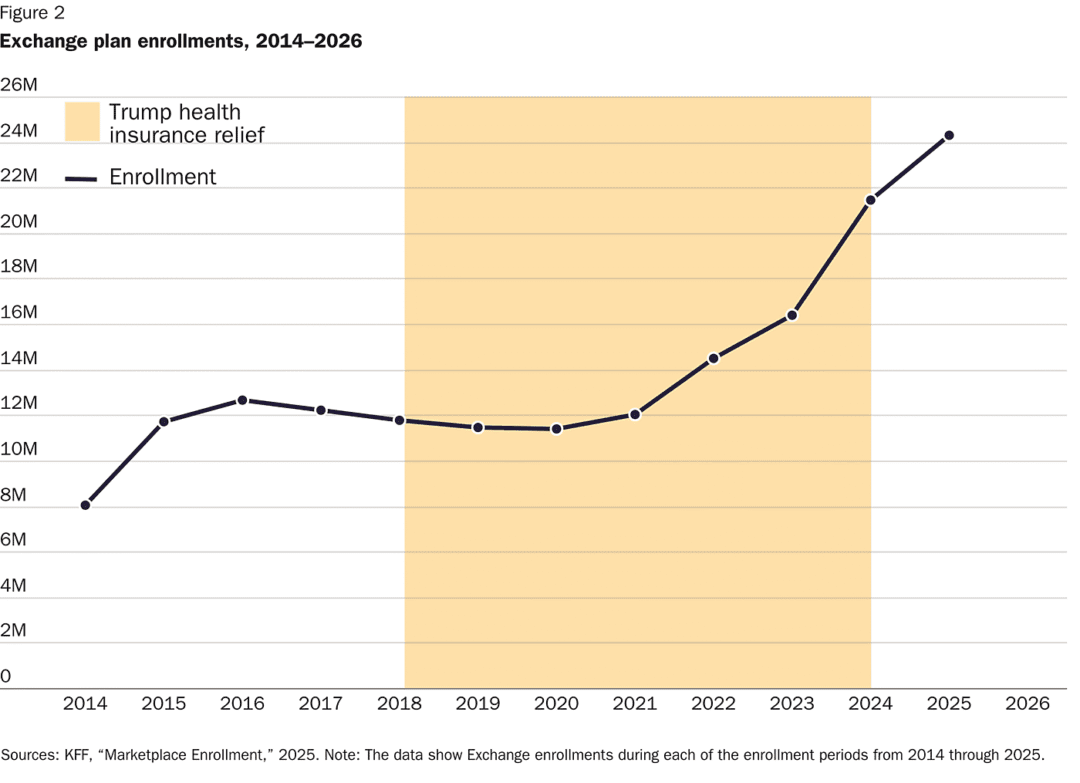
Meanwhile, enrollment grew.
States don’t need to wait for Congress. In Kentucky, Rep. Vanessa Grossl (R‑Georgetown) introduced legislation that would immediately let residents access Obama’s 2014 relief by removing barriers to Obamacare-exempt plans available in US territories.