Free banking money guru George Selgin opines.


Free banking money guru George Selgin opines.

The nightmare scenario is that once again tax cuts and deregulation take the blame, allowing Bernie Sanders or a socialist candidate to ride another populist wave, only this one headed far left, into the White House of 2020.
The optimism that has followed the election of Donald Trump has pushed the Dow Jones Industrial Average to the threshold of 20,000, a level that will be both a nominal record and a symbolic milestone. Although this is not the way most observers had predicted that 2016...

Truly free trade can only take place in free markets, not in the prevailing mixed economies where governments pick favored trading partners

Adam Smith’s central contribution to economic understanding was surely his demonstration that under an institutional arrangement of individual liberty, property rights, and voluntary exchange the self-interested conduct of market participants could be shown to be cons…

Those countries that embrace free trade with new technologies stand to reap great rewards. Those who do not, and revert to trade protectionism, could experience economic recession and monetary adversity accompanied by serious social and financial upheaval.

The war on cash is a sign that central banks may see a dangerously deteriorating situation, one that has led to a feeling of desperation by governments and a wish to control the wealth of citizens.
Over the past year, central banks, commercial bankers and prominent economists have expressed the view that digital money and transfers should replace large denomination cash and cash transactions. This dramatic transition has been fostered under the guise of the...
In The Wealth of Nations, Adam Smith applied Francis Hutcheson’s idea of “natural liberty” in formulating a conception of the meaning of individual freedom and the role and functions of limited government in a free society.
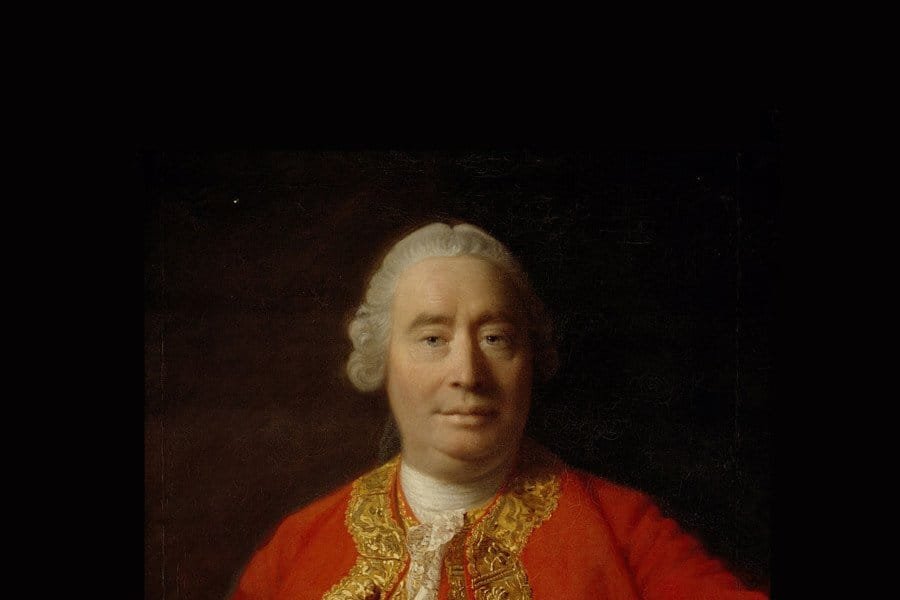
Hume presented a devastating criticism of Mercantilist thinking on trade and commerce, while at the same time, demonstrating the self-regulating and “balancing” forces of the market process.

One of the most cherished misunderstandings, if not delusions, of the social engineer – the individual who would presume to attempt to remake society through conscious and planned design – is the confident belief that he (and those like him) can ever know enough to …
This talk examines the development, operation and performance of monetary systems in the absence of government intervention.
How currency monopolies promote booms and busts, and having a lender of last resort leads to moral hazard and financial instability.

Society was not created by design to provide safety and security, but, instead, freedom and rights emerged and evolved out of more primitive forms of tribal and collective association as responses to considered injustices and abusive power.

Clear moral principles, such as honesty, make the right—the self-interested, win-win—course of action so much easier.
Adam Smith was one of Hutcheson’s students in Glasgow, and his influence on Adam Smith was singularly significant, from everything from the importance of division of labor and the role of private property, to the normative notion of a free society based on a “system…

The “moral” that Mandeville drew from his tale was that prosperous, wealthy and great societies only arise from men’s self-interested desires, and that is what made for successful civilizations:
Protectionism is not a recipe for prosperity—free trade is.
CSR also sneaks in the ideal of altruism, the duty to serve others “to further some social good, beyond the interests of the firm.”

“Monetary control” refers to the various procedures and devices the Fed and other central banks employ in their attempts to regulate the overall availability of liquid assets, and through it the general course of spending, prices, and employment, in the economies they o…
I regard any need for last-resort lending as reflecting, not the inherent shortcomings of private financial markets, but the debilitating effects of misguided regulatory interference with the free development of those markets.

By clearly and publicly withdrawing their moral sanction of government’s freedom-curtailing and welfare-destroying actions, business leaders can have a big impact on all of our future.
The election of Ronald Reagan in 1980 provides the best recent precedent for the unexpected triumph of Donald Trump (in my opinion, the other post-war Republican takeovers of the White House –Ike in ’52, Nixon ’68, and W. in ’00 – did not constitute a real break...
The election of Ronald Reagan in 1980 provides the best recent precedent for the unexpected triumph of Donald Trump (in my opinion, the other post-war Republican takeovers of the White House –Ike in ’52, Nixon ’68, and W. in ’00 – did not constitute a real break...
Brexit and the Donald Trump presidential victory should rightly be viewed as the most significant international developments of the last decade. Both events illustrate a breaking down of globalist order and they both threaten the entrenched elite that has so...
Brexit and the Donald Trump presidential victory should rightly be viewed as the most significant international developments of the last decade. Both events illustrate a breaking down of globalist order and they both threaten the entrenched elite that has so...
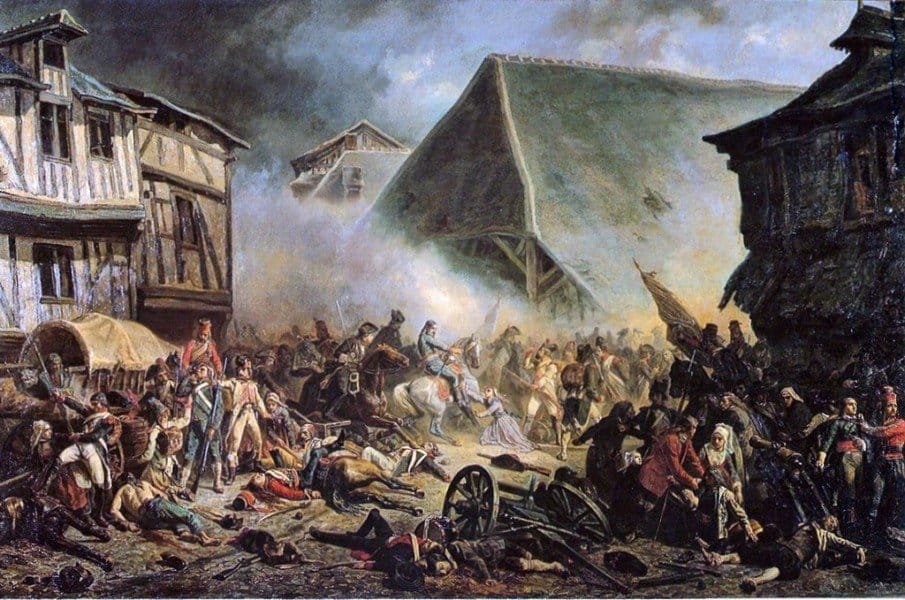
When governments find it impossible to continue raising taxes or borrowing funds, they have invariably turned to printing paper money to finance their growing expenditures. The political economy of the French Revolution is a tragic example of this.

The best policy for government to follow is “laisser passer, laisser faire” — let goods pass and leave men alone to their own decisions.
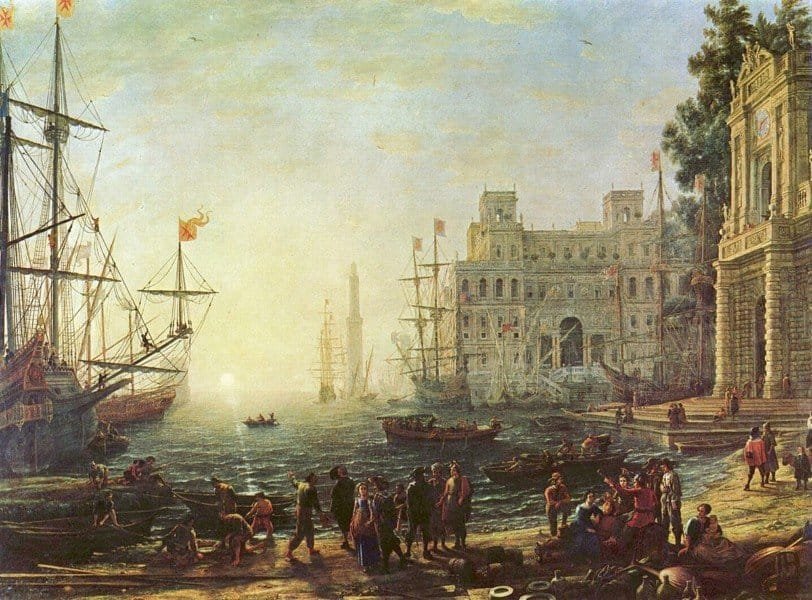
Mercantilism developed in the emerging nation-states under the kings, especially, in France and Spain and in Great Britain, as a set of economic tools to assist in bringing about the centralization of political power and control.
Stunned political analysts are missing the most plausible argument explaining Donald Trump’s unexpected victory. The misreading of the American electorate stems from the political class’ acceptance of mistaken (and increasingly insane) economic dogma that has...

The Catholic Church had a set of fundamental beliefs and principles that set it apart from the Greek and Roman views that had preceded it, and which were to have importance in the future in terms of their economic impact.

The sad reality is that the battle for monetary freedom has for some time now taken the form of a rearguard action, aimed at resisting as much as possible ever-increasing government incursions into an ever-shrinking realm of financial choice.
Latest pro-Capitalism goodness sent weekly to your email box.
No spam. Unsubscribe anytime.