Central banking is a form of central planning. The Federal Reserve has a legal monopoly over the monetary system of the United States.
Money & Banking
The Production of Money Isn’t (Necessarily) the Production of Wealth
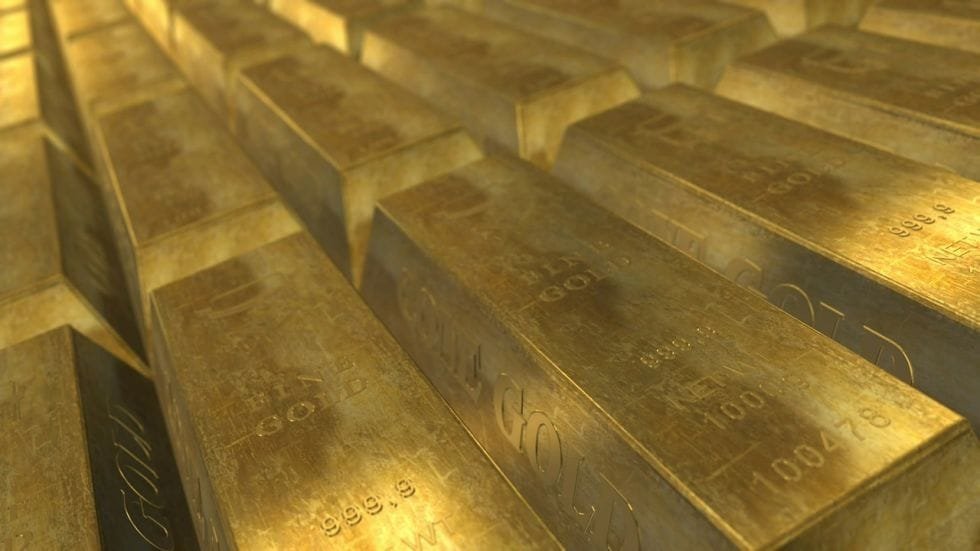
The creation of money doesn’t create wealth, unless money itself is wealth — as it was when it was gold and silver.
John Allison on the Financial Crisis
John Allison, former CEO & Chairman of BB&T and current president of Cato, talks on the financial crisis and the philosophy of Ayn Rand at the Adam Smith Institute’s first Ayn Rand Lecture at Drapers’ Hall.
Macro Aggregates Hide the Real Market Processes at Work
Government planners fail to “manage” market economies as the indicators they use are themselves false signals hiding from view the reality of the complex market system.
Interest Rates Need to Tell the Truth
In the middle of July 2018, President Donald Trump said in an interview that he was “not happy” with the Federal Reserve nudging up interest rates and threatening economic growth in the United States. At the recent Jackson Hole, Wyoming, meeting of global central bank...
The Myth that Central Banks Assure Economic Stability
What is the fundamental issue is: monetary central planning – with its embarrassingly awful one hundred year track record with paper monies – or getting government’s direct or indirect hand off the handle of the monetary printing press.
European Bank HSBC Abandons Financing Fossil Fuels
Banks to stop financing fossil fuel development: Sound investment decisions vs. virtue signaling?
Books: The Moral Case for Finance
The essential moral case for finance that Brook and Watkins present is that finance is good by the standard of human flourishing.
Austrian Monetary Theory vs. Federal Reserve Inflation Targeting
The phantom of “inflation targeting.”
A Monetary Policy Primer, Part 11: Last-Resort Lending
Forget about monetary policy for a moment or two, and imagine, instead, that you’re back in 6th grade. You and your classmates are about to go on a camping trip, involving some strenuous hiking, and lasting several days.
A Monetary Policy Primer, Part 10: Discretion, or a Rule?
Forget about monetary policy for a moment or two, and imagine, instead, that you’re back in 6th grade. You and your classmates are about to go on a camping trip, involving some strenuous hiking, and lasting several days.
Government Monopoly Money vs. Personal Choice in Currency
Greater monetary freedom would not only give every citizen a legal right to protect and secure his income, wealth and market transactions from abusive mismanagement of the government’s monopoly monetary printing press. It could also serve as a check on the degree of such government abuse.
Wrong Lessons from Canada’s Private Currency, Part 3
The real lessons to be learned from Canada’s 19th-century currency system.
Wrong Lessons from Canada’s Private Currency, Part 2
The real lessons to be learned from Canada’s 19th-century currency system.
Wrong Lessons from Canada’s Private Currency, Part 1
The real lessons to be learned from Canada’s 19th-century currency system.
Making a Financial Choice: More Capital or More Government Control
The Federal Reserve’s monetary and regulatory policies were major contributors to the 2007-2009 Great Recession.
Government Regulations Protect Bad Banks From Competition
The best way to spur ethical conduct by banks—trading value for value with their customers—is to deregulate banking.
How the Fed’s Monetary Policies Caused the Great Recession
John Allison's testimony before the Subcommittee on Monetary Policy and Trade, Committee on Financial Services, United States House of Representatives on March 16, 2017. Chairman Barr, ranking Member Moore, and members of the committee, thank you for inviting me to...
A Monetary Policy Primer, Part 9: Monetary Control, Today
Instead of endeavoring to influence a market-determined federal funds rate by reducing or increasing the supply of bank reserves, the Fed now adjusts a pair of rates determined solely by its own administrative decrees, while conducting open-market operations without any particular reference to these rate adjustments.
A Monetary Policy Primer, Part 8: Money in the Latest Great Muddle
A stable inflation rate is no guarantee of overall economic stability.
David Ricardo on Wealth, Inflation, and Freedom (Economic Ideas)
David Ricardo (1772-1823) was one of the most influential economic theorists of the first half of the nineteenth century.
Has the Fed been Holding Down Interest Rates?
Free banking money guru George Selgin opines.
War on Cash Spreads to India
The war on cash is a sign that central banks may see a dangerously deteriorating situation, one that has led to a feeling of desperation by governments and a wish to control the wealth of citizens.
Money and Banking Under Laissez-Faire Capitalism
This talk examines the development, operation and performance of monetary systems in the absence of government intervention.
Subscribe for free.
Latest pro-Capitalism goodness sent weekly to your email box.
No spam. Unsubscribe anytime.