There’s a move that passes for argument in discourse. Someone cites a text, matches it to a situation, and declares the situation a violation. The text does the work. Reality—what actually happens, what has always happened, what the words have ever meant in practice—doesn’t get consulted. The conclusion arrives via symbol manipulation, not analysis.
Scott Adams calls this word-thinking. The mistake isn’t ignorance. It’s substituting a map for the territory—operating entirely within a linguistic universe while believing you’re describing the real one. Word-thinkers aren’t necessarily dishonest. They’re often highly intelligent people who’ve learned to manipulate symbols with great precision and have confused that skill for understanding.
Watch for it. It’s everywhere. And it is almost never more seductive than when the words in question carry serious moral weight.
Constitutional language is a perfect habitat.
The Accusation
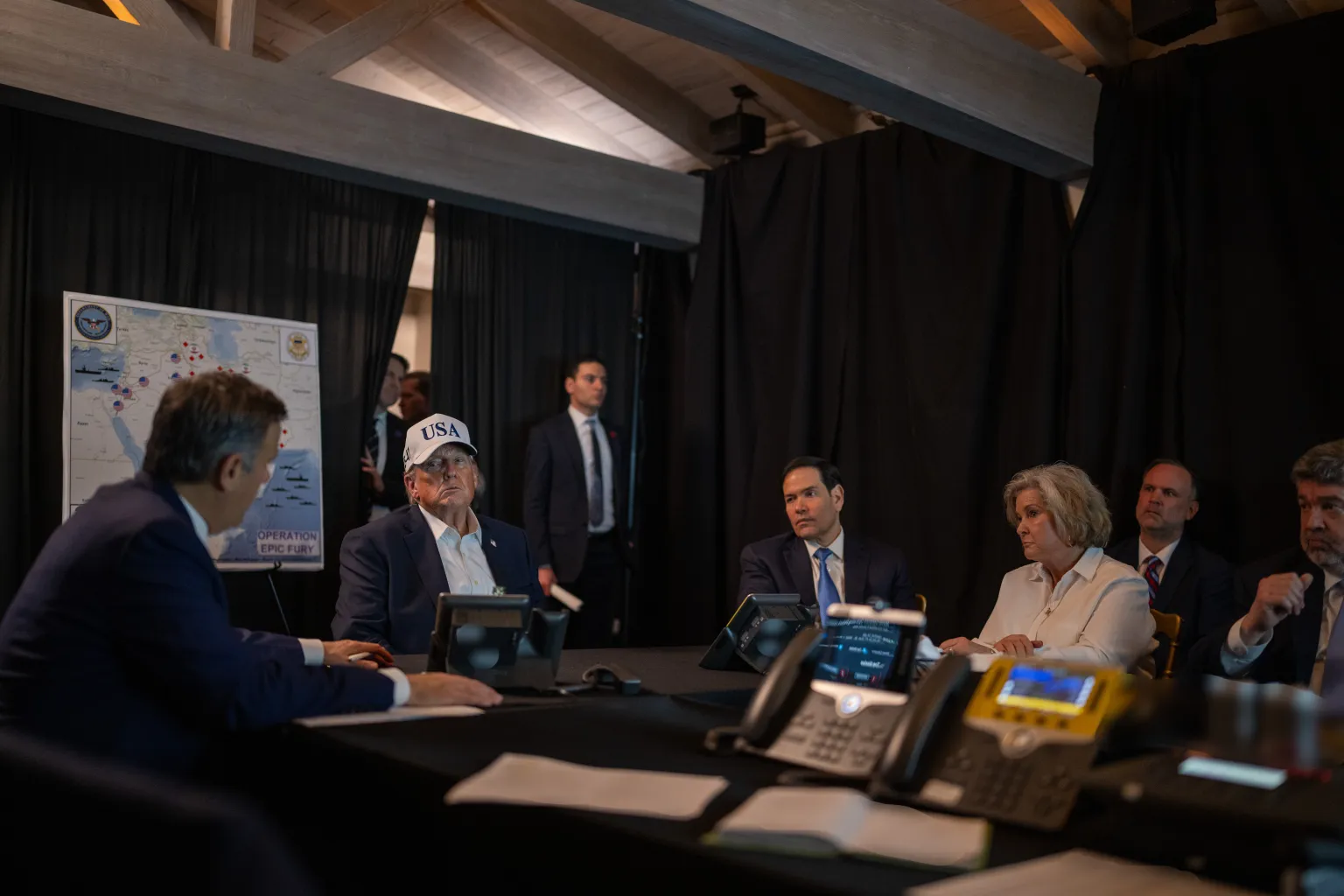
President Trump launched precision strikes against Iranian nuclear facilities in June 2025 and again on February 28, 2026—operations that, by most accounts, killed the Supreme Leader and dismantled Iran’s nuclear infrastructure. He did this without a declaration of war and without congressional authorization.
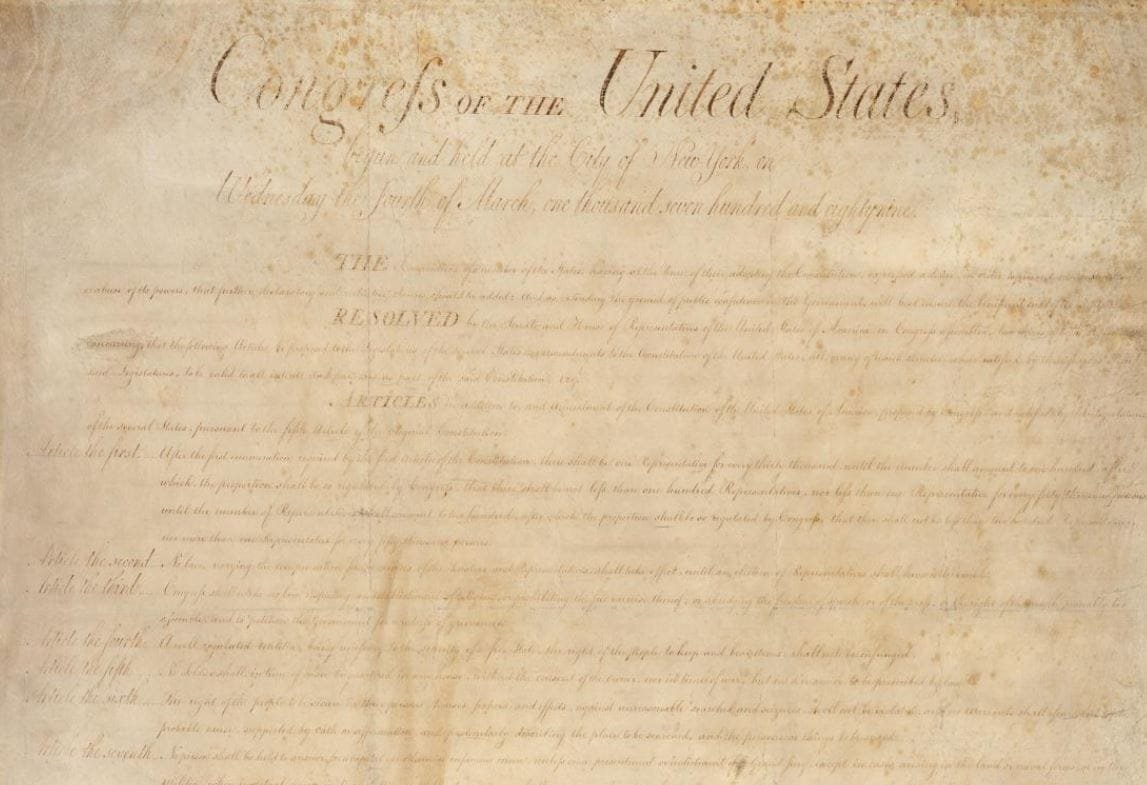
The objection followed immediately. Article I, Section 8 gives Congress the power to declare war. No declaration was issued. Therefore the strikes were unconstitutional.
Notice the structure. A word—declare—gets matched to an absence—no declaration—and produces a conclusion—unconstitutional. Each step follows from the previous one with apparent logical force. No reality gets checked at any point.
That’s word-thinking in a suit.
What Reality Looks Like
Here’s the question word-thinking skips: what has “declare war” actually meant in practice, across the full history of American military action, as interpreted by the institutions with authority to interpret it?
The answer demolishes the critics’ case—not because the Constitution secretly authorizes unlimited executive war-making, but because the constitutional framework they’re invoking has never operated the way they claim.
Congress declared war in 1812, 1898, 1917, 1941, and never again. Not in Korea, where Truman committed 36,000 Americans to die on his own authority. Not in Vietnam. Not in Lebanon, Grenada, Panama, Somalia, Haiti, Bosnia, or Kosovo. Clinton ran a 78-day air campaign over Kosovo—destroying Serbian infrastructure, killing civilians, forcing a government from power—and his administration argued the operation didn’t even constitute “hostilities.” Obama sustained seven months of NATO air operations in Libya, explicitly aimed at regime change, exceeded the War Powers Resolution’s 60-day clock, and watched Congress fund the operation anyway. Trump in his first term struck Syria twice. The Soleimani strike in January 2020 killed a senior Iranian military commander. The Office of Legal Counsel (OLC) justified it under Article II alone.
Scholars count somewhere between 100 and 200 unilateral uses of military force since the founding. No court has ever invalidated one on constitutional merits. Campbell v. Clinton—where a congressman sued to force a vote authorizing Kosovo—was dismissed. Every similar challenge has been dismissed, on standing or political-question grounds, consistently, across decades.
This is the territory. The critics’ map doesn’t match it.
How the Framework Actually Works
The OLC has articulated, across administrations of both parties, a two-part test for unilateral presidential authority. The action must serve important national interests—a standard encompassing protection of U.S. personnel, regional stability, deterrence of WMD proliferation, and prevention of wider conflict. And the scope must fall short of “war in the constitutional sense”—defined as prolonged, large-scale ground engagement with sustained U.S. casualties.
Targeted airstrikes on facilities have never met that threshold. They’ve never been required to.
The framers didn’t draw a bright line because they couldn’t. They gave Congress the power to declare formal, sustained belligerence between nations. They gave the president command of forces in the field, authority to respond to emergencies, and the initiative that military action requires. What they didn’t do—and this matters—is specify the boundary. That ambiguity is not an oversight. It reflects genuine uncertainty about a question no document could resolve in advance.
Two centuries of practice filled the gap. The “gloss” of historical precedent, as the Supreme Court acknowledged in Youngstown, supplements constitutional text. Where Congress has not clearly prohibited and has repeatedly acquiesced—funding operations, passing non-binding resolutions, declining to cut appropriations mid-conflict—executive action is presumptively valid.
The Iran strikes fit squarely within this framework. Nuclear breakout represents an imminent proliferation threat. Iranian proxies have attacked U.S. forces and allies for decades. Precision airstrikes on facilities—however consequential the results—are structurally identical to Libya, Syria, and Kosovo. The OLC memo will say so. Courts will decline jurisdiction. Congress will vote on resolutions that go nowhere.
The Second Target
Now watch the word “unconstitutional” itself.
It’s doing a specific job in this debate, and that job is not primarily analytical. “Unconstitutional” carries enormous moral and legal payload—it signals illegitimacy, lawlessness, a president operating outside civilized governance. Deploying it ends conversations. It shifts the burden. It makes the defender prove a negative.
But the word is only as meaningful as the constitutional theory behind it. Strip away the moral weight and ask: what theory, tested against what evidence, produces this conclusion? The answer, as we’ve seen, is a theory that has never described operational reality, invoked by critics who supported functionally identical actions under presidents they preferred.
That’s word-thinking deployed as a weapon—using a symbol’s emotional payload to produce a conclusion the underlying analysis doesn’t support.
This doesn’t mean the word is never valid. It means you should interrogate it every time you encounter it. Ask: what’s the theory? What’s the evidence? Does the map match the territory? If someone can’t answer those questions—if the argument stops at “the Constitution says Congress declares war”—you’re watching symbol manipulation, not constitutional analysis.
Where the Argument Is Actually Hard
Good thinking requires knowing the difference between strong ground and weak ground. Here’s where the constitutional case against unilateral action genuinely strengthens.
Scale and duration matter. OLC’s own doctrine holds that prolonged high-intensity war with substantial American casualties shifts the balance. A sustained ground campaign with significant U.S. losses looks different from precision airstrikes—not just politically, but doctrinally. If the Iran operations evolve into something resembling Korea or Vietnam, the congressional case gains real force. That’s not word-thinking. That’s the framework’s own internal logic applied honestly.
Preemption versus response is also genuinely contested. The Article II case is strongest when responding to imminent threats—nuclear breakout, ongoing attacks on U.S. forces. It’s weaker for purely preventive action against speculative future threats. The line between “imminent” and “we’d rather act now” is real, disputed, and important.
Knowing where your argument is strong and where it softens is itself the skill. Word-thinkers don’t make this distinction. They apply the same confidence everywhere, which is how you know they’re working from the map.
The Lesson
Constitutional language is not self-interpreting. Words like “declare,” “war,” and “unconstitutional” arrive pre-loaded with apparent meaning, which is precisely what makes them useful for word-thinking. You can skip the analytical work—the history, the doctrine, the institutional practice—and still sound rigorous. You’re citing the founding document. What could be more serious?
But seriousness is not the same as accuracy. And the founding document exists in a world where Truman fought Korea without a declaration, where Clinton bombed Belgrade for 78 days without authorization, where no court has ever stopped a president from using force on constitutional grounds.
That world is the territory. Any constitutional argument that ignores it is working from a map.
When you encounter confident constitutional language—about war powers or anything else—ask the question word-thinking always skips. What does this word actually refer to? What has it meant in practice? Does the argument survive contact with reality, or does it depend entirely on the word doing work the evidence doesn’t support?
The critics of the Iran strikes have an argument. It’s just not a constitutional one. It’s a political one—about democratic deliberation, about the slow erosion of congressional war powers, about what kind of republic we want to be. That argument is worth having.
But first you have to stop doing word-thinking and start asking what’s actually true.