The West has spent four years subcontracting Ukrainian dying and calling it solidarity. That is the sentence the entire debate has been organized to avoid. Everything else—the impassioned speeches, the aid packages, the solemn invocations of sovereignty and international order—has been elaborate scaffolding around that one ugly fact. We want Ukraine to win. We are unwilling to do what winning requires. So Ukrainians pay the difference in blood, and we applaud their courage as a substitute for sharing their risk.
A negotiated settlement that rewards Russian aggression is a revolting outcome. I want to be precise about that before making the case for it, because the case only means something if the revulsion is real. Watching Russia keep territory it seized by force—territory defended at the cost of hundreds of thousands of Ukrainian lives—should nauseate anyone paying attention. The Budapest Memorandum, under which Ukraine surrendered the world’s third-largest nuclear arsenal in exchange for security guarantees, was a real promise. The people who broke it should be held accountable. The cities Russia has leveled, the children it has deported, the civilian infrastructure it has systematically destroyed—these are not footnotes. They are the central facts of the war.
I am for ending this war anyway. Because the alternative is not justice. The alternative is Ukraine continuing to bleed toward demographic collapse while the people most responsible for this catastrophe appear on television to demand more resolve.
The Moral Case—Stated at Full Strength
The argument for fighting on is not weak, and it deserves to be stated honestly before it is dismantled. Russia invaded a sovereign nation. It violated explicit treaty commitments. It has demonstrated, across four years of documented atrocities, that it will not moderate its conduct in response to world opinion. The argument that rewarding this aggression invites more of it—against Moldova, against Georgia, eventually against NATO’s eastern flank—is not paranoia. It is pattern recognition grounded in a consistent record.
Ukraine has earned its right to make this argument. Its people have demonstrated a will to resist that shamed every premature obituary written in the war’s first hours. Roughly eighty percent still support continuing to fight. That is not a population looking for an exit. That is a nation. The moral weight of that resistance is real, and anyone who dismisses it hasn’t been paying attention.
All of this is true.
It is also true that truth doesn’t win wars. Will doesn’t win wars. Courage doesn’t win wars. Matériel wins wars—and on the matériel question, the West made its answer clear years ago. They gave Ukraine enough to bleed. Never enough to win.
The People Who Let This Happen and What Could Have Been Done, Instead
The loudest advocates for funding Ukraine forever are the people who watched Russia practice for this war for eight years and did nothing. They don’t get to launder that failure through Ukrainian blood.
This requires some precision, because it is not a partisan point. It is an institutional one. The foreign policy class—the credentialed consensus that has staffed the think tanks, testified before Congress, shaped the editorial positions of serious publications, and presided over Western strategy since the Cold War’s end—has been continuously and consequentially wrong about Russia since 2014. That record is not ambiguous.
Russia seized Crimea in 2014. The response was sanctions calibrated not to actually bite, language designed to signal concern without triggering consequences. Encroachment noted. Cost: negligible. The Donbas burned at low intensity for eight years while Europe deepened its energy dependence on Russia, Nord Stream 2 advanced, and NATO extended promises to Ukraine it had no intention of backing with substance. The foreign policy class called this management. It was appeasement without the honesty to name itself.
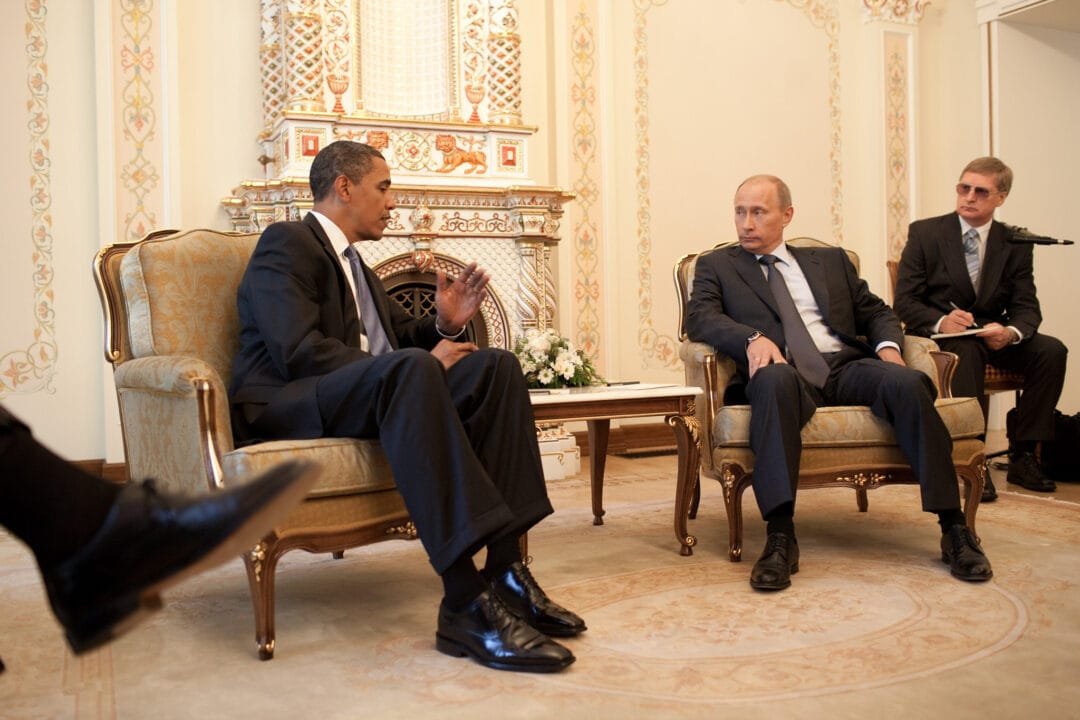
Then Russia invaded, and the same class that presided over all of it discovered its outrage. It began demanding a level of commitment to Ukraine it had never advocated when commitment might have prevented the war. The regret over previous failures—Iraq, Afghanistan, the whole ruinous catalog of interventionist overreach—costs nothing now. The rubble has settled. What that regret did not produce was any reckoning with the underlying habit: declare the moral stakes, demand resolve, and let someone else absorb the consequences of the conviction.
The remorseful Iraq hawk and the liberal interventionist arrive at Ukraine from different directions and occupy exactly the same position. Both are certain about what Ukraine owes history. Neither is volunteering to help pay the bill. Costless courage is not courage. It is a posture. Postures, however sincerely held, do not hold defensive lines.
The foreign policy class does this with think tank papers and congressional testimony. But the same failure has a retail version, visible on every social media feed since February 2022. The profile picture updates. The flags on suburban porches. The furious moral certainty of people who have contributed nothing to Ukraine’s defense and sacrificed nothing for their conviction, directed at anyone honest enough to say the math doesn’t work.
History is full of people who believed in a cause enough to liquidate their assets, cross an ocean, pick up a weapon. Those people exist. They have always existed. If you are one of them—if you sold something, gave something, risked something—your moral authority on this subject is real and I will not question it. But if you changed an avatar and shared a thread and called people like me Putin apologists for telling the truth about a war you’ve paid nothing to fight, spare the rest of us the flag-waving. You are not standing with Ukraine. You are feeling good about yourself at Ukraine’s expense. There is a difference, and Ukrainians deserve to have someone say so out loud.
A different foreign policy tradition—one less attached to managed engagement, more willing to impose real costs early, more honest about the relationship between credibility and deterrence—might have changed Putin’s calculation before February 2022. We cannot know. What we can say is that the approach which did preside over the eight years of encroachment produced the war it was supposed to prevent. The people who built that approach have paid no professional price for building it. Ukraine has paid everything.
What Four Years of Attrition Has Produced
Russia controls approximately twenty percent of Ukrainian territory. The Ukrainian population has shrunk to roughly thirty million and is falling—not a statistic, but the sound of a nation being unmade in real time. Combined casualties exceed one and a half million. Infrastructure damage surpasses half a trillion dollars. The front has moved, but it has not broken. Russia absorbs its losses because Russia has losses to absorb. Ukraine absorbs its losses because it has no choice.

Russia’s artillery production runs at roughly three times the Western rate. Its manpower advantage, however brutal the cost of deploying it, remains. Its economy, under sanctions that were designed to be survivable, has continued to function. The Iran war has spiked oil prices, delivering billions in additional weekly revenue to Moscow. None of this adds up to a Russian victory—but it adds up to a Ukrainian path to victory that does not exist without a Western commitment the West has already declined to make.
The question was never whether Ukraine deserved to win. The question was whether the West would do what winning actually required. The answer has been delivered not in words but in the grinding arithmetic of aid packages—always enough to prevent immediate collapse, never enough to produce decisive advantage. That answer is not going to change. The Iran war has further constrained American munitions. European defense production, however expanded, has not closed the gap. The math has not moved in Ukraine’s favor. It has moved against it.
Justice and Survival Are Not the Same Thing
Justice would require Russia to withdraw, pay reparations, and face accountability for documented atrocities. Justice would vindicate the Budapest Memorandum. Justice would mean that aggression failed completely and was seen to fail, so the next autocrat calculating the cost of invasion would have to recalculate.
None of that is available. Not because Ukraine doesn’t deserve it. Because the world that would deliver it doesn’t exist, and no quantity of moral insistence will call it into being.
Survival requires something narrower and more brutal: stopping the killing on terms that leave a Ukrainian state intact, a Ukrainian people with a future, and a Ukrainian identity unextinguished. Those terms will be unjust. They will reward aggression in ways that should nauseate anyone paying attention. They will not feel like victory.
They will, however, leave Ukraine alive.
A country that negotiates from exhaustion can rebuild, rearm, and rejoin the argument from a position of existence. A country that fights to its demographic collapse cannot. The deterrence argument—that conceding territory now invites future aggression—is real and deserves a direct answer rather than dismissal. The answer is this: deterrence requires a deterrer. A Ukraine that has been bled to the edge of demographic viability deters nothing. Survival is the precondition for every other goal, including eventual justice. The sequence matters.
Only people not dying can afford to hold pure positions. That is not a criticism. It is a description of how moral clarity works when the costs fall somewhere else.
To Ukrainians
To Ukrainians reading this: your people survived the Holodomor—Stalin’s engineered famine, four to seven million dead in one of the most fertile places on earth, grain exported while borders were sealed and families starved. You know better than anyone what Russian domination has historically meant for your people, which is why this fight is existential for you in a way it can never be for an Western European with a flag avatar or a Washington commentator with a think tank salary. You are not defending territory. You are defending the right to exist as Ukrainians.
You have fought with a courage that has no modern equal. You took the world’s assumptions about your country and burned them in the first seventy-two hours. You have earned every right to demand more, to reject compromise, to insist that justice is not negotiable. I am not arguing you are wrong to feel that. I am arguing that the world willing to match that feeling with actual commitment does not exist—and that the people who should have built it failed you long before February 2022.
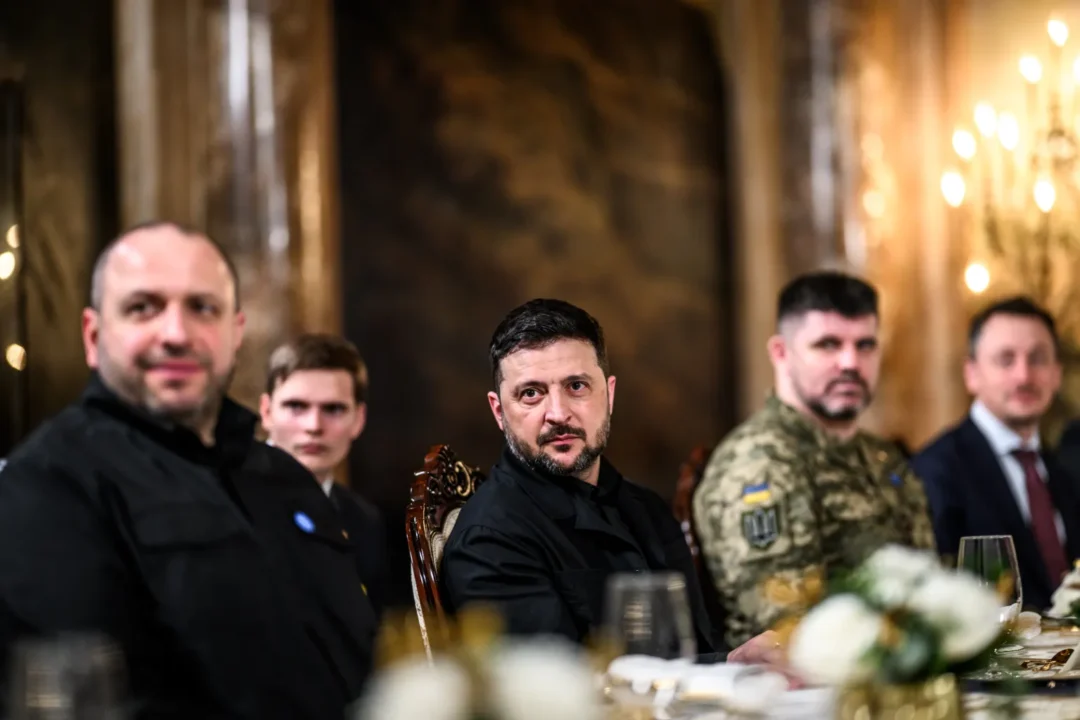
You deserve the truth about that more than you deserve one more foreigner’s borrowed resolve. The settlement that may come will be unjust. It will not honor what you have sacrificed. It will ask you to accept the permanent loss of land your people died defending. I find that revolting. I am for it anyway, because the alternative is not justice. The alternative is more of your people dying for an outcome the West decided years ago it would not pay for—while the people who made that decision retain their platforms, their positions, and their confidence that history will vindicate their demands.
Ukraine’s survival is not a consolation prize. It is the foundation of everything that comes after. A free Ukraine that exists is more dangerous to Russian revisionism over the next fifty years than a Ukraine that fought to annihilation in the name of principles its allies wouldn’t defend.
What Honesty Requires
We are cleaning up a mess. That is the honest description of every negotiation that will now take place. The terms will be imperfect because the situation is the direct result of sustained, documented incompetence—and worse—by the people whose job was to prevent it. The settlement will be unjust because the people who broke the promise that was supposed to prevent this war are not the ones being asked to pay.
Ending the war is not the betrayal of Ukraine.
What came before it was.