Renee Nicole Good died on January 7, 2026, in Minneapolis. An ICE agent shot her three times during a deportation operation. Her children no longer have a mother. The agent who fired, Jonathan Ross, acted in what the Department of Homeland Security has determined was self-defense during a lawful federal operation.
Good’s widow reportedly expressed shock that the agents used real bullets. That single statement reveals everything wrong with the activist ideology that led Good to position her SUV to obstruct federal officers, refuse their commands, and move her vehicle toward Agent Ross. Somewhere in the fervor of resistance, basic facts got lost: law enforcement officers carry real weapons, cars can be used as weapons, and moral conviction provides no protection from physics or lawful authority.
This is not a story about a blameless victim. This is a story about ideology so divorced from reality that it sends people into dangerous confrontations apparently unprepared for obvious consequences.
The Facts Are Not Ambiguous
Good was part of ICE Watch, a network that actively disrupts immigration enforcement operations. On January 7, during Operation Metro Surge—a lawful deportation operation targeting individuals with criminal records and outstanding removal orders—Good positioned her SUV to obstruct the scene. Video footage shows what happened. Agents commanded her to exit the vehicle. She refused. They repeated the order. She remained in the driver’s seat. The vehicle moved forward toward Agent Ross. He fired three shots while he was hit by Good’s SUV, causing internal bleeding.
These are the facts. Good made a series of deliberate choices: align with an organization dedicated to obstructing federal operations, position her vehicle to block agents, refuse lawful commands, remain in control of a multi-ton vehicle, and move that vehicle toward an armed officer. Each choice escalated the danger. The outcome was not mysterious or unforeseeable. It was the logical consequence of treating law enforcement as theater rather than reality.
The shock about real bullets is perhaps the most damning detail. It suggests that Good—and presumably others trained in similar tactics—genuinely did not understand that ICE agents are federal law enforcement officers carrying loaded weapons they are authorized and sometimes required to use. This is not ignorance we should treat gently. This is a failure to grasp basic facts that any rational adult should understand.
The Ideology That Kills
The activist network that Good belonged to operates on a premise: that ICE enforcement is illegitimate, that resistance is righteous, and that physical obstruction is justified by moral conviction. This premise is factually wrong and lethally dangerous.
ICE was created by the Homeland Security Act of 2002. It enforces the Immigration and Nationality Act—federal law passed by Congress, signed by presidents, and repeatedly upheld by courts including the Supreme Court. Officers conduct arrests using administrative warrants authorized under 8 U.S.C. § 1226. The agency’s current priorities—removing violent criminals, gang members, and individuals with final removal orders—align with federal statute and executive authority.
You may dislike these laws. You may find enforcement harsh or the priorities misguided. Those are legitimate political positions. But calling ICE operations “illegal” or treating agents as lawless actors is simply false. The agency enforces laws that exist. Agents execute warrants issued under legal authority. Operations like Metro Surge target individuals subject to lawful removal.
The distinction matters enormously. When activists treat legitimate law enforcement as illegitimate tyranny, they encourage resistance that has real consequences. Physical obstruction of federal officers is a crime under 18 U.S.C. § 1505 and § 111. More importantly, it creates volatile confrontations where split-second decisions determine who lives and dies.
Agent Ross had seconds to assess a threat: a vehicle moving toward him during an operation where organized resistance was present. Under Graham v. Connor and federal use-of-force guidelines, officers make reasonable decisions based on perceived threats. A moving vehicle is a deadly weapon. Ross responded accordingly. The investigation concluded it was self-defense. That conclusion is consistent with law, with the facts, and with what we ask of officers enforcing federal law in hostile environments.
The Violence Activists Ignore
The danger of obstruction is not theoretical. The Department of Homeland Security reports a 500 percent increase in assaults on ICE agents since 2024. Agents have been dragged by vehicles, shot at, struck with projectiles, and ambushed. Assaults causing injury are up 413 percent. Molotov cocktails have been thrown at ICE facilities in Texas. Agents in California have faced organized ambushes. This is the second serious injury by vehicle that Agent Ross experienced.
This violence has consequences beyond injured officers. On September 24, 2025, Joshua Jahn opened fire on the Dallas ICE facility from a nearby rooftop using a bolt-action rifle. He killed two detainees and critically wounded a third. Norlan Guzman-Fuentes from El Salvador died at the scene. Miguel Ángel García-Hernández from Mexico, a father of four with a fifth child on the way, died days later from his injuries. Jose Andres Bordones-Molina from Venezuela remained in critical condition.
The FBI found ammunition casings marked “ANTI-ICE” and notes indicating Jahn targeted the facility because of his opposition to immigration enforcement. He acted alone, motivated by the same ideology that drives obstruction networks: that ICE is illegitimate and resistance is righteous. In tragic irony, his attack killed none of the agents he apparently targeted. He killed detainees—the very people the anti-ICE ideology claims to protect.
This is what happens when ideology overrides reason. Activists are so convinced of their righteousness that they cannot see basic facts. Cars are weapons. Agents carry real guns. “Anti-ICE” violence kills immigrants. Physical obstruction creates chaos that endangers everyone—officers, activists, bystanders, and the very people such actions purport to help.
The Fetish for Disruption
The organized resistance to ICE has become systematic. Rapid response networks mobilize when operations begin. Activists position vehicles to block movement, surround targeted individuals, and physically interfere with arrests. The goal is disruption, justified by moral fervor and social media acclaim.
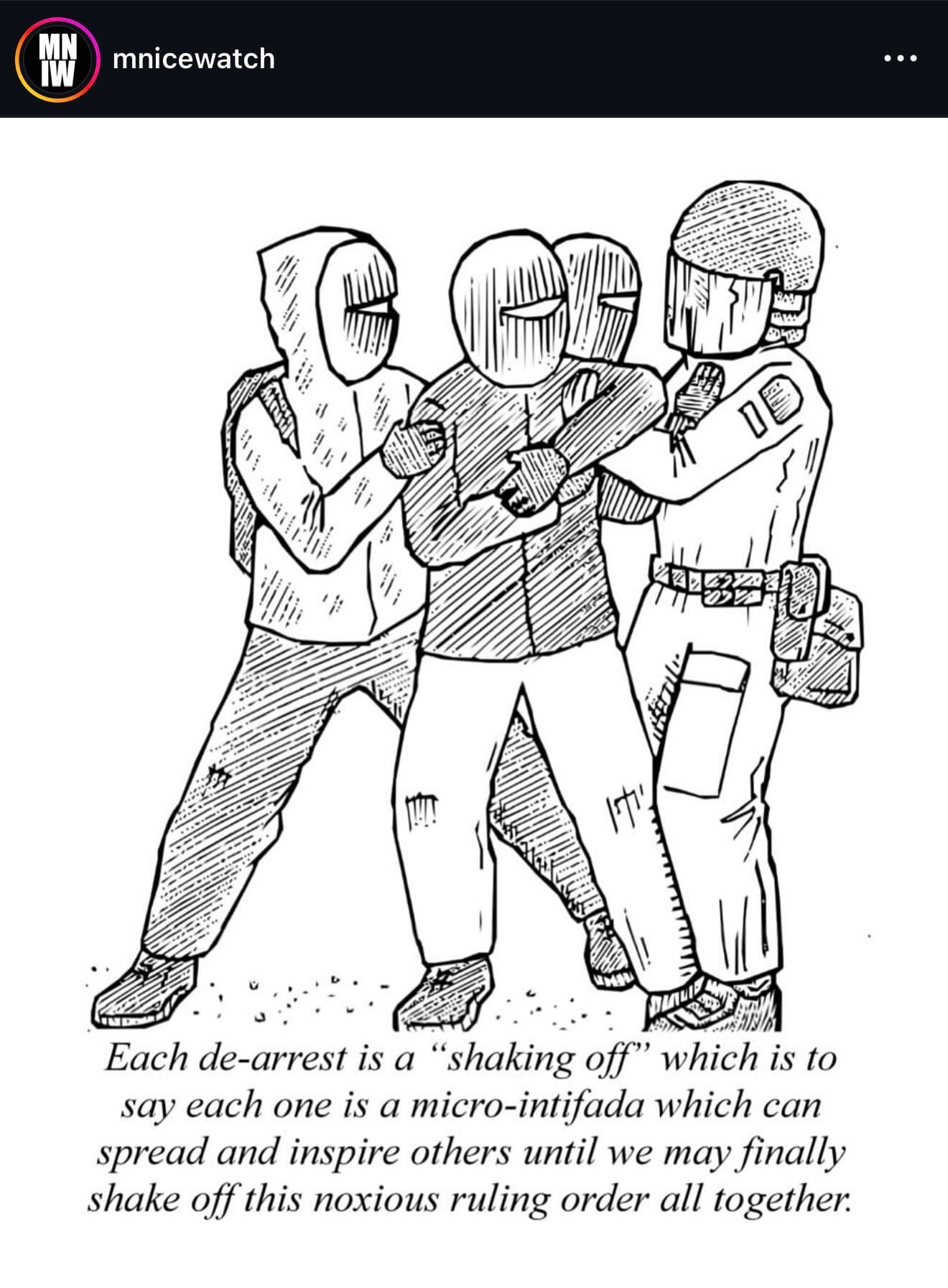
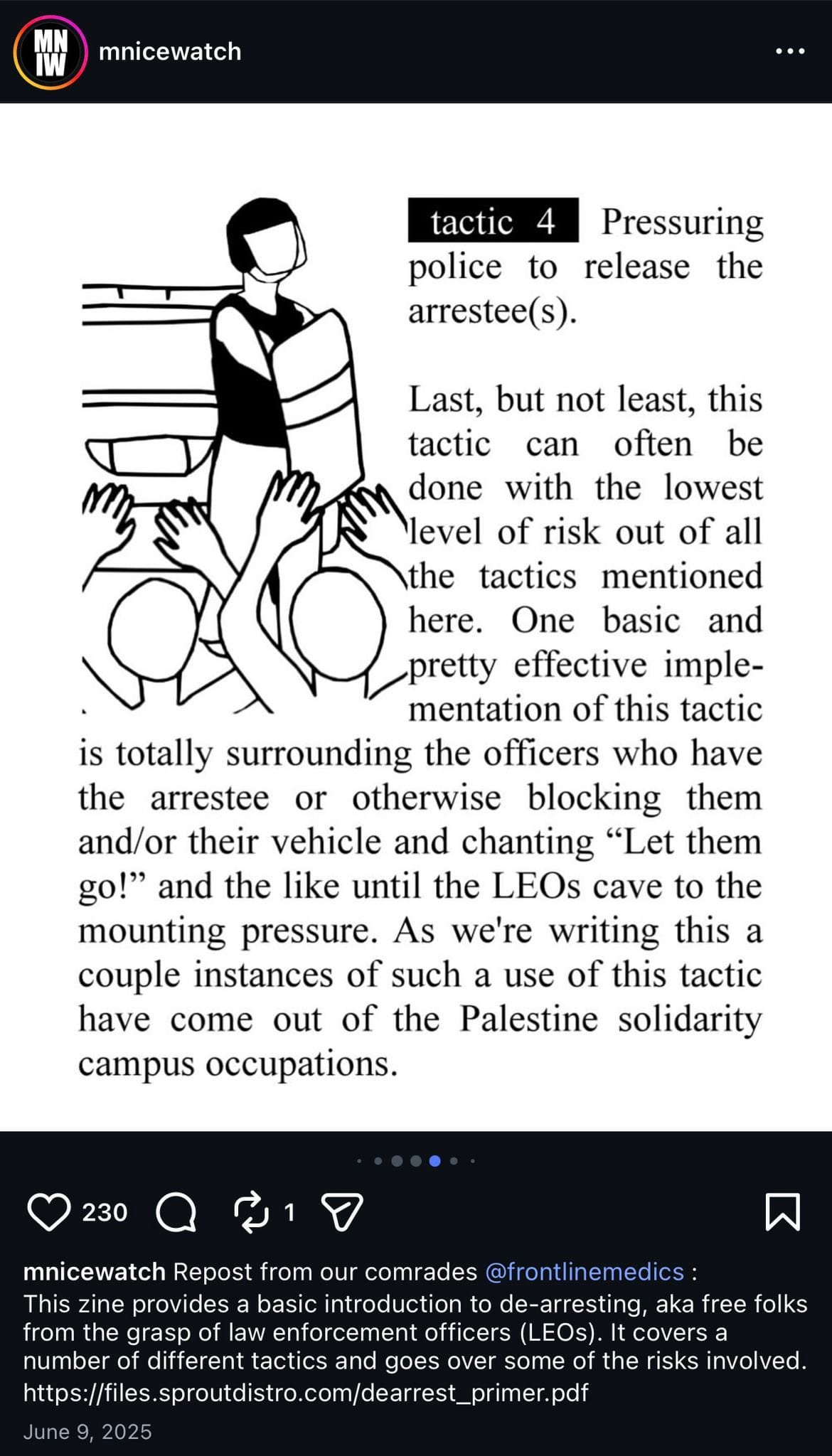
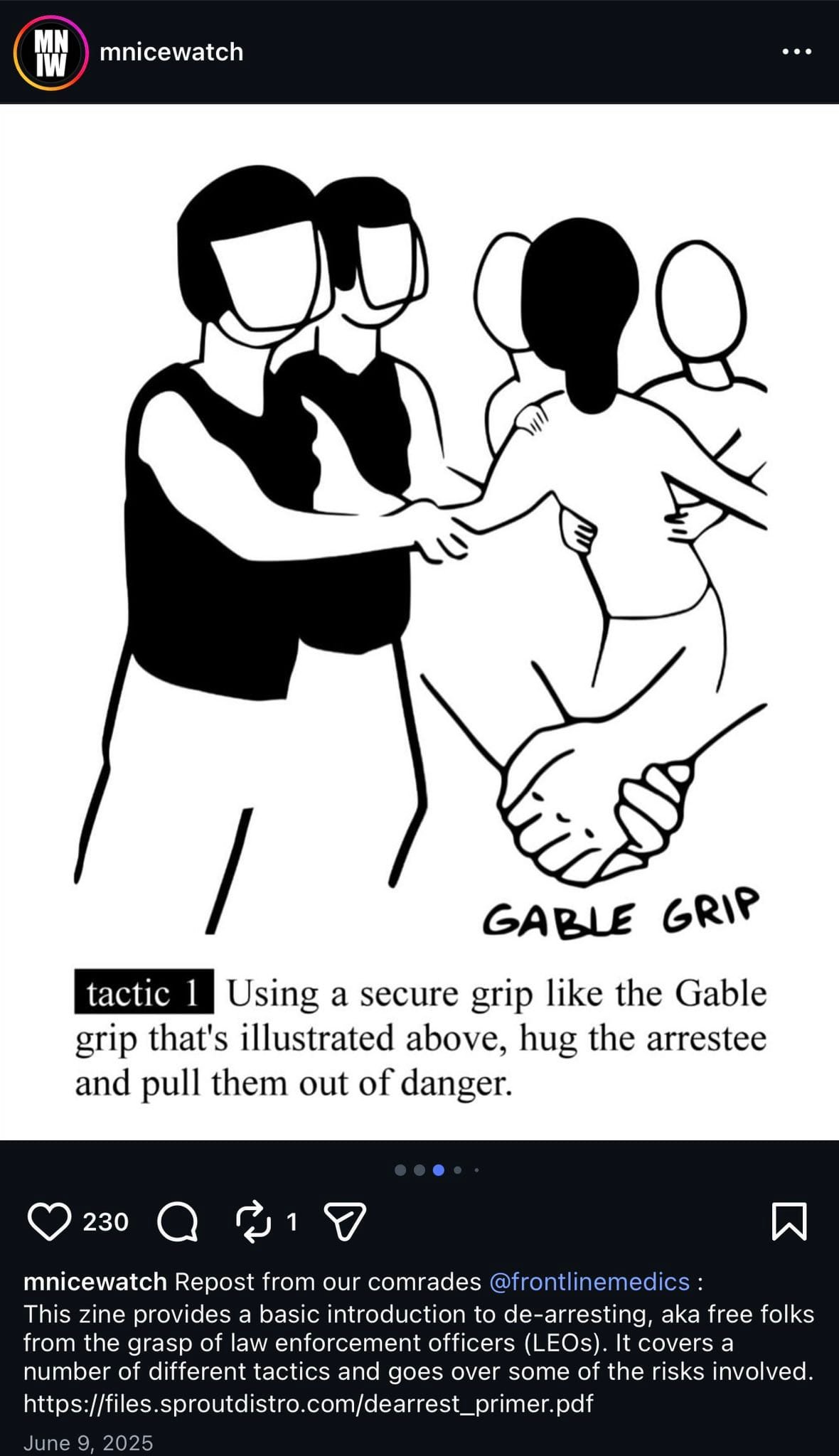
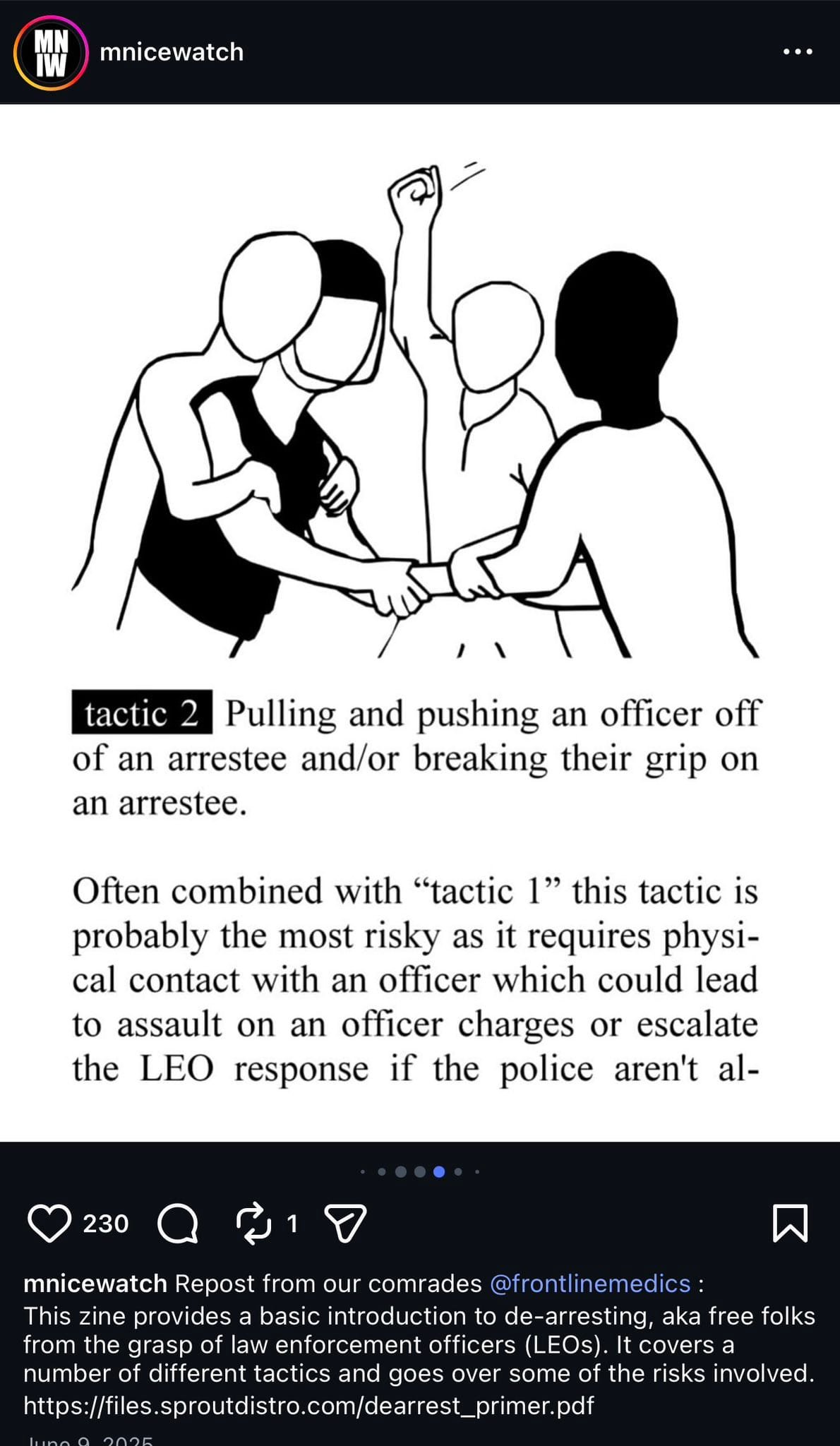
Images from Minnesota Ice Watch page on Instagram
But what does obstruction actually accomplish? It doesn’t stop deportations. Operations continue after delays. It doesn’t change laws or policies. It doesn’t help the individuals being arrested—in fact, it often traumatizes them further as they’re caught in chaotic confrontations. It creates criminal liability for the activists. And it escalates danger for everyone involved.
What it does provide is emotional satisfaction. The immediate gratification of “doing something.” The social validation of resistance. The moral clarity of standing against perceived injustice. These psychological rewards apparently outweigh practical considerations like whether the actions help anyone or what happens when you physically obstruct armed federal officers.
This is ideology as fetish—emotional investment so intense that facts become irrelevant. The shock about real bullets, the surprise that agents actually enforce the law, the apparent belief that conviction creates immunity from consequences: these are symptoms of a mindset detached from reality.
Renee Good paid for that detachment with her life. Her children paid with the loss of their mother. Agent Ross will carry the weight of that shooting forever. And for what? The operation continued. The law remains in force. Nothing changed except a child is now orphaned, and two more have no mother, because their mother couldn’t grasp—or wouldn’t accept—basic facts about what happens when you obstruct law enforcement.
If You Oppose the Law, Change It
The United States provides multiple lawful avenues to oppose policies and change laws. None of them involve positioning your vehicle to block federal agents.
- Protest peacefully. The First Amendment protects demonstrations, rallies, and vigils that don’t physically obstruct operations. Stand outside ICE facilities with signs. Organize marches. Make your voice heard without creating dangerous confrontations.
- Lobby your representatives. Congress controls ICE funding and can change enforcement priorities through legislation. Organizations like the National Immigration Law Center run sophisticated advocacy campaigns. Call your senator. Write to your representative. Vote for candidates who share your views on immigration policy.
- Support legal challenges. Groups like the ACLU file lawsuits over detention conditions, due process violations, and enforcement practices. These cases have produced real changes in how ICE operates. Court victories matter more than street disruptions.
- Engage in the democratic process. If you believe immigration laws are unjust, elect leaders who will reform them. Expand legal pathways. Change detention policies. Shift enforcement priorities. This work is slower and less emotionally satisfying than blocking vans, but it’s what actually produces lasting change in a nation of laws.
These methods work within the system because the system exists whether activists accept it or not. ICE has legal authority. Agents enforce valid laws. Courts uphold that authority. Treating legitimate law enforcement as illegitimate doesn’t make it so—it just makes resistance both criminal and dangerous.
The Price of Unreason
Three children lost their mother because she chose ideology over reality. Miguel Ángel García-Hernández’s five children lost their father because an “anti-ICE” shooter couldn’t see past his own righteousness to recognize he was murdering the people he claimed to defend. Agent Ross must live with having killed someone during a lawful operation. Countless families have been traumatized by chaotic confrontations that helped no one.
This is the cost of treating facts as negotiable, of letting emotional fervor override basic reason, of organizing resistance movements apparently without preparing participants for the reality that law enforcement uses force and vehicles are weapons and bullets are real.
The United States has a serious illegal immigration problem. Millions of people are in this country unlawfully. Some are violent criminals. Some are gang members. Some simply entered or remained illegally and are subject to lawful removal. ICE exists to enforce immigration law. That enforcement is necessary, legitimate, and will continue regardless of how many activists position themselves in intersections.
If you oppose current immigration policy, work to change it through lawful means. If you cannot accept that, at minimum understand the reality: federal agents have authority, weapons, and the legal right to use force when threatened. Your moral conviction about immigration does not suspend physics. Your emotional investment in resistance does not make you immune to consequences. And your ideology, however deeply felt, cannot change the fact that obstruction creates danger that gets people killed.
Renee Good made choices. Those choices had consequences. The tragedy is not that an innocent woman was killed by rogue agents. The tragedy is that an ideology so divorced from basic reality sent a mother of two into a confrontation she was apparently unprepared to survive. Her children deserved better. The detainees killed in Dallas deserved better. We all deserve better than movements that valorize disruption while ignoring the facts that make such disruption lethal.
Facts exist. Law exists. Authority exists. Consequences exist. It’s past time the resistance acknowledged reality.
Recommended Reading: