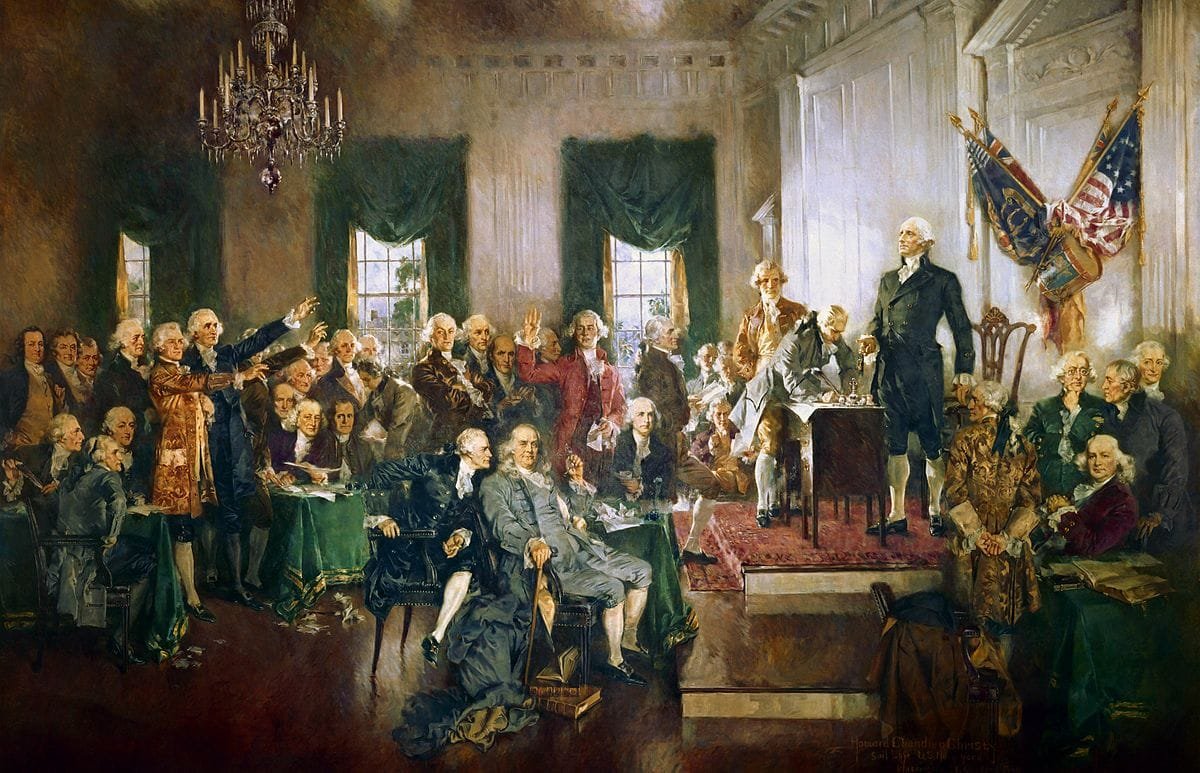
Adam Mossoff addresses the nature of patent rights, emphasizing the Founding Fathers’ moral achievement in securing patents and other intellectual property rights in U.S. law.
Patent Rights: Life, Liberty and Intellectual Property
The Founding Fathers’ moral achievement in securing patents and other intellectual property rights in U.S. law.

Mr. Mossoff is a professor of law at Antonin Scalia Law School at George Mason University. He is a Visiting Intellectual Property Fellow in the Edwin Meese III Center for Legal and Judicial Studies at The Heritage Foundation, a Professor of Law at the Antonin Scalia Law School of George Mason University, and a Senior Fellow at the Hudson Institute.His scholarship has been relied on by the Supreme Court, by federal courts, and by federal agencies, and he has been invited numerous times to testify before the Senate and the House of Representatives on proposed intellectual property legislation.Visit his website at adammossoff.com.
Subscribe for free.
Read by students, professors, and citizens, Capitalism Magazine provides over 9,000 free to read articles and essays from pro-reason, individual rights perspective.
Mr. Mossoff is a professor of law at Antonin Scalia Law School at George Mason University. He is a Visiting Intellectual Property Fellow in the Edwin Meese III Center for Legal and Judicial Studies at The Heritage Foundation, a Professor of Law at the Antonin Scalia Law School of George Mason University, and a Senior Fellow at the Hudson Institute.His scholarship has been relied on by the Supreme Court, by federal courts, and by federal agencies, and he has been invited numerous times to testify before the Senate and the House of Representatives on proposed intellectual property legislation.Visit his website at adammossoff.com.
No spam. Unsubscribe anytime.
The views expressed above represent those of the author and do not necessarily represent the views of the editors and publishers of Capitalism Magazine. Capitalism Magazine sometimes publishes articles we disagree with because we think the article provides information, or a contrasting point of view, that may be of value to our readers